
How can the museum reflect who we are?
Hekayyatna is curating a community-led exhibition at the Horniman Museum, opening 3 December 2026…
and we want your input!
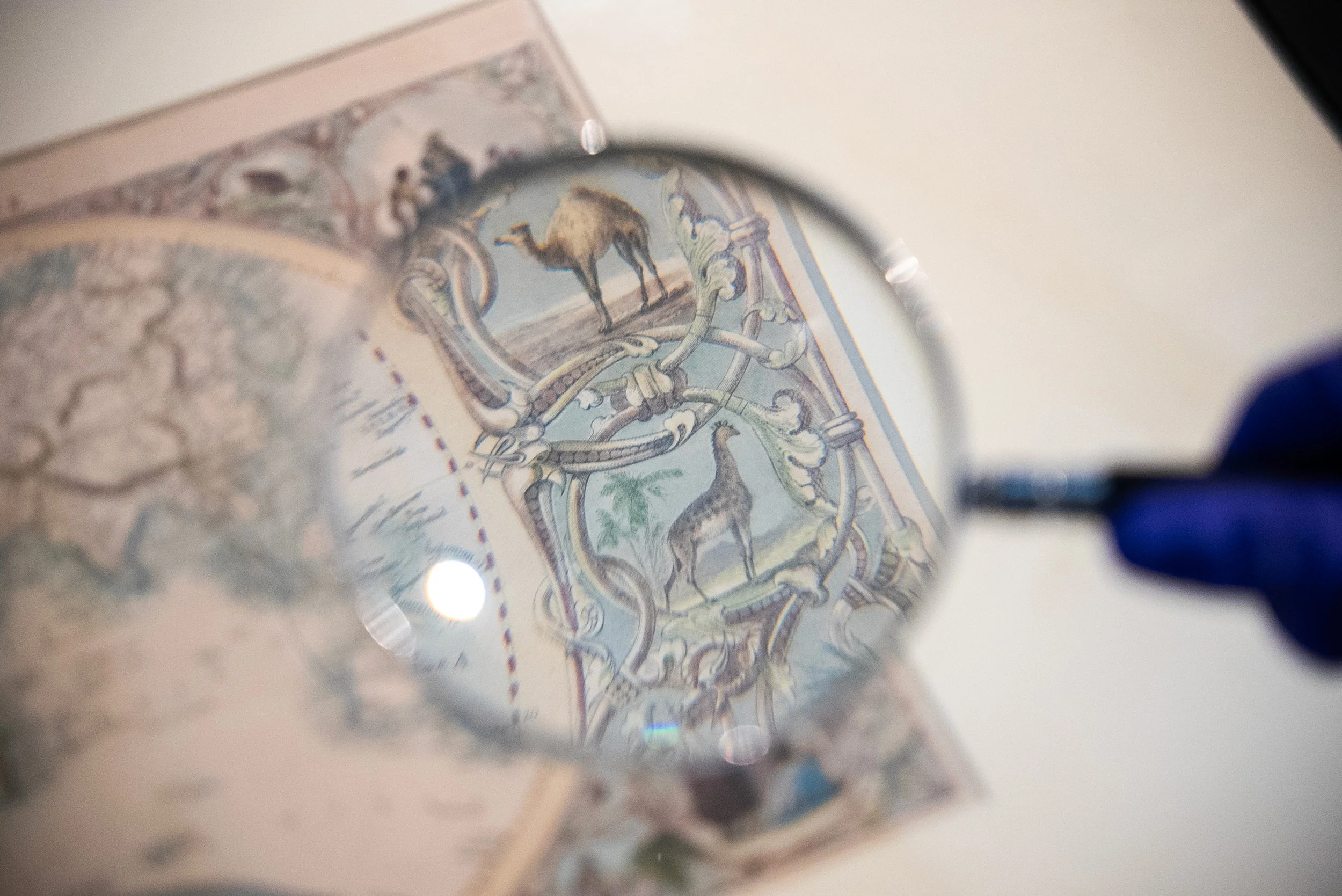
The Horniman Museum in south-east London has an extensive collection from our region: South West Asia & North Africa*.
A shepherd's cap from Palestine. Sandals from Algeria. A prayer mat from Jordan. Pen reeds, abayas, an amulet, a bridal skirt from Tunisia, a plastic ruler picked up in Egypt but also catalogued under ‘Taiwan’…
We’re calling these ‘belongings’ rather than objects, because that is what they are: they belonged to someone, they came from somewhere. And they arrived here by routes that are rarely written down.
Each belonging carries a museum record: a number, a material, a place, a sentence or two of description (at most). Those records were written by people who – for the most part – were far from the communities who made & used these belongings.
The information around them is rarely careful and sometimes outright wrong: Persian catalogued as Arabic, a misbaha described as a tool for making decisions, a sculpture of a man praying rendered incorrectly, a label that says one culture where we would say another…
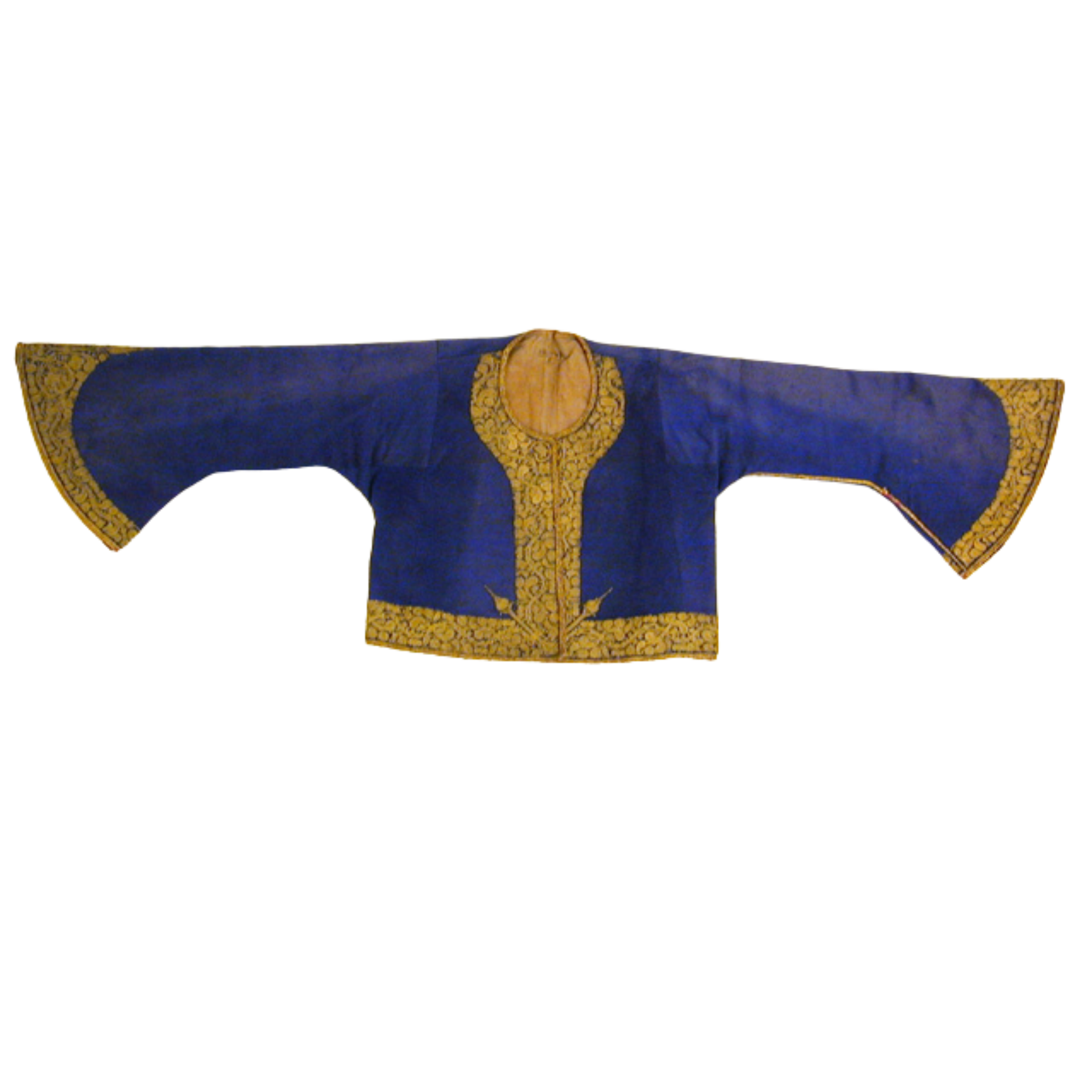
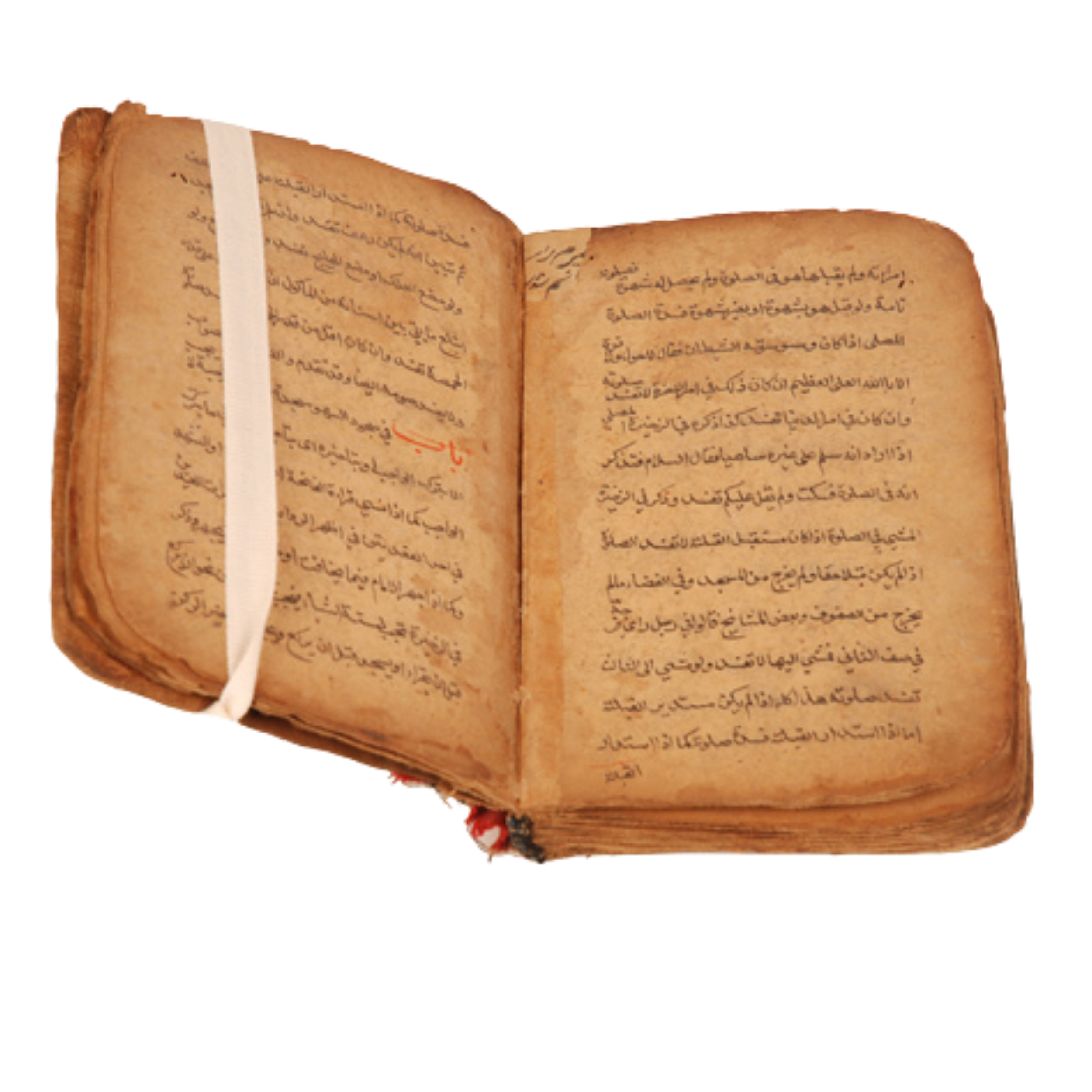
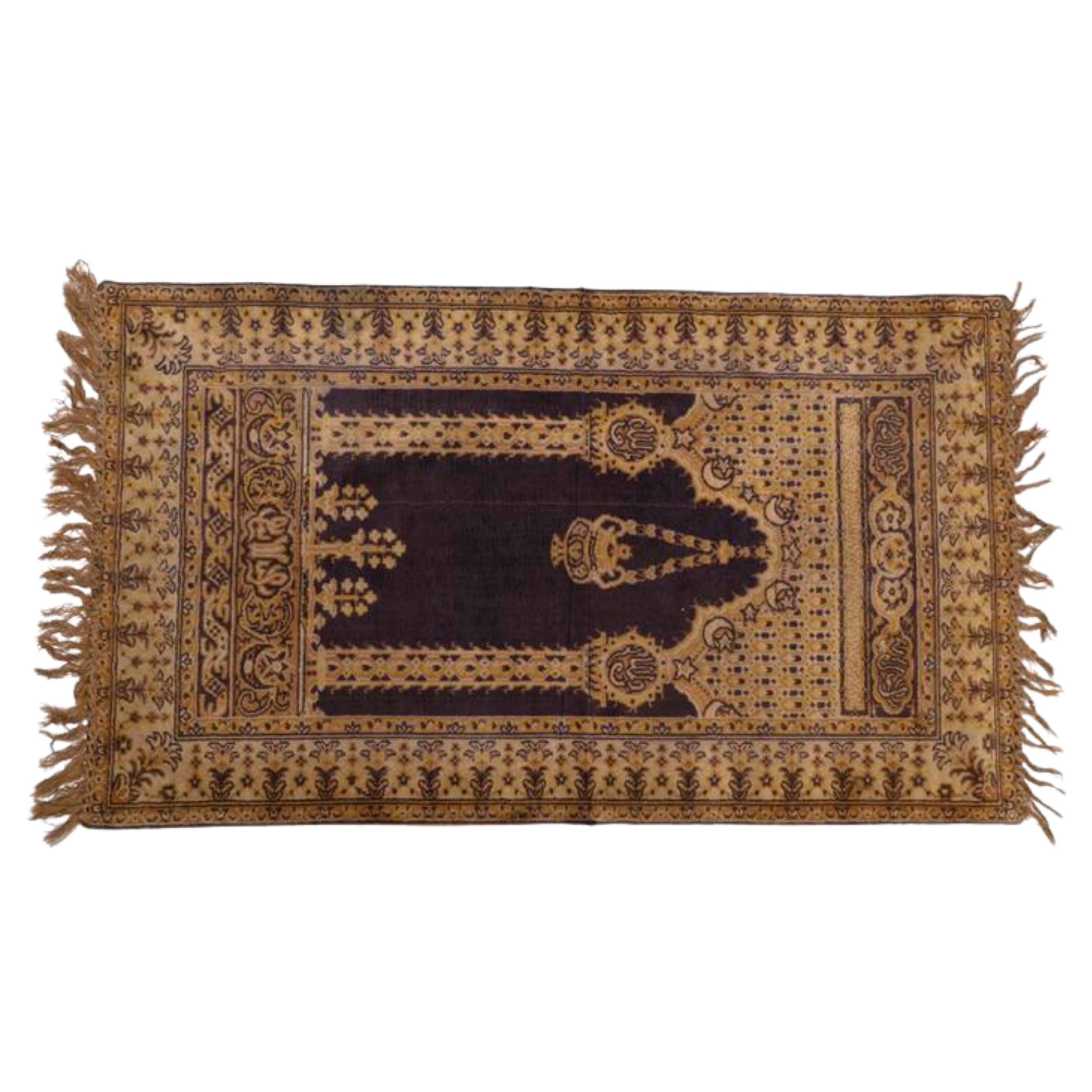
Below, you can look through a selection of these belongings alongside exactly how the Horniman Museum catalog describes them.
Then you can respond, in whatever way makes sense to you:
Rewrite or challenge a museum label
Share a personal or family memory
Identify a name, use, material, or cultural meaning missing from the record
Create a poem, drawing, photograph, or short reflection
Question how the item entered the museum
Tell us what you would like the museum & visitors to understand
Or refuse the museum’s framing altogether and offer your own!
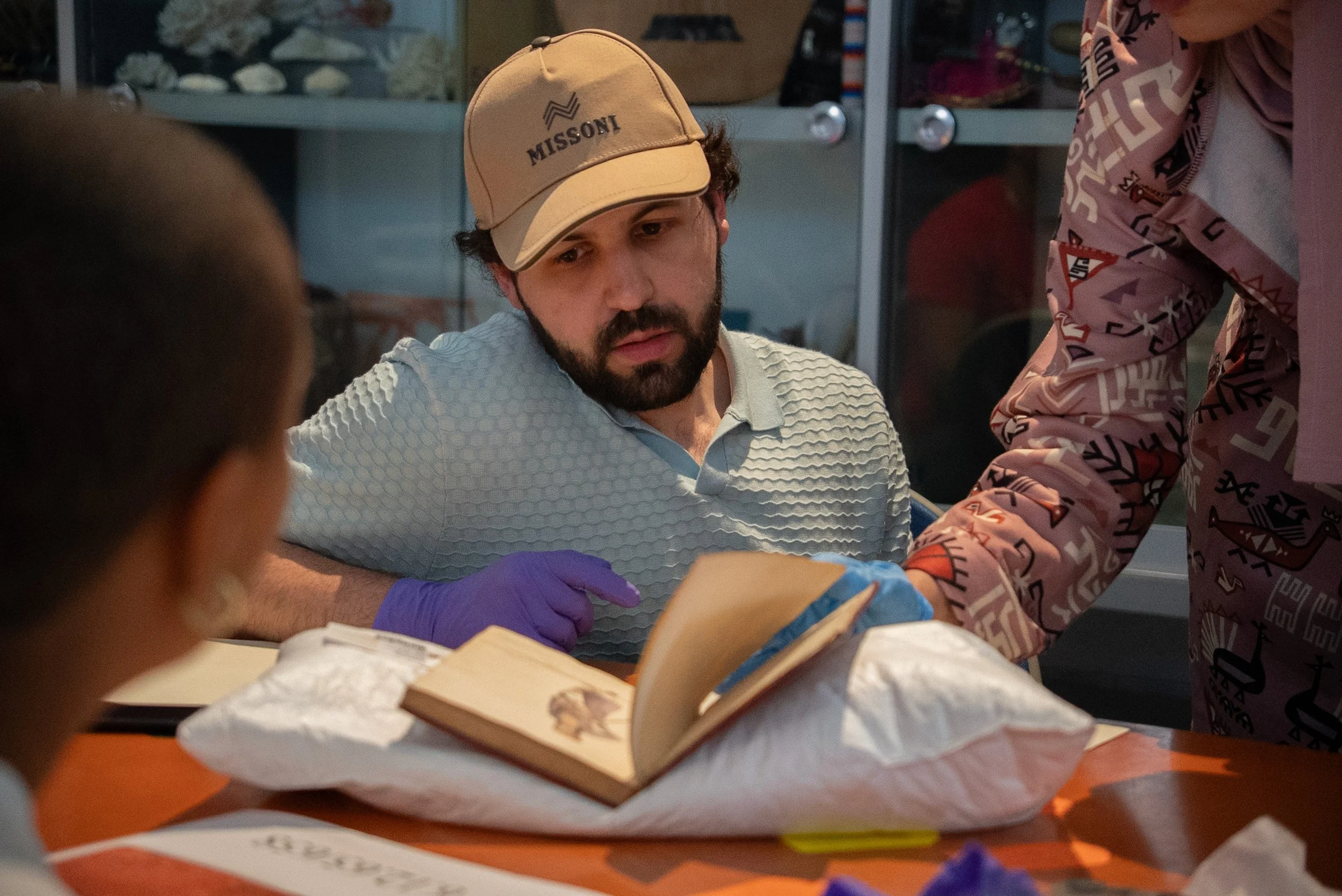
You do not need to be an academic, historian, or museum expert. We welcome personal memories, family knowledge, questions, emotions, creative writing, artwork, and critical responses. There is no single correct way to respond.
What happens when it's only the outsider who gets to describe us in the museum?
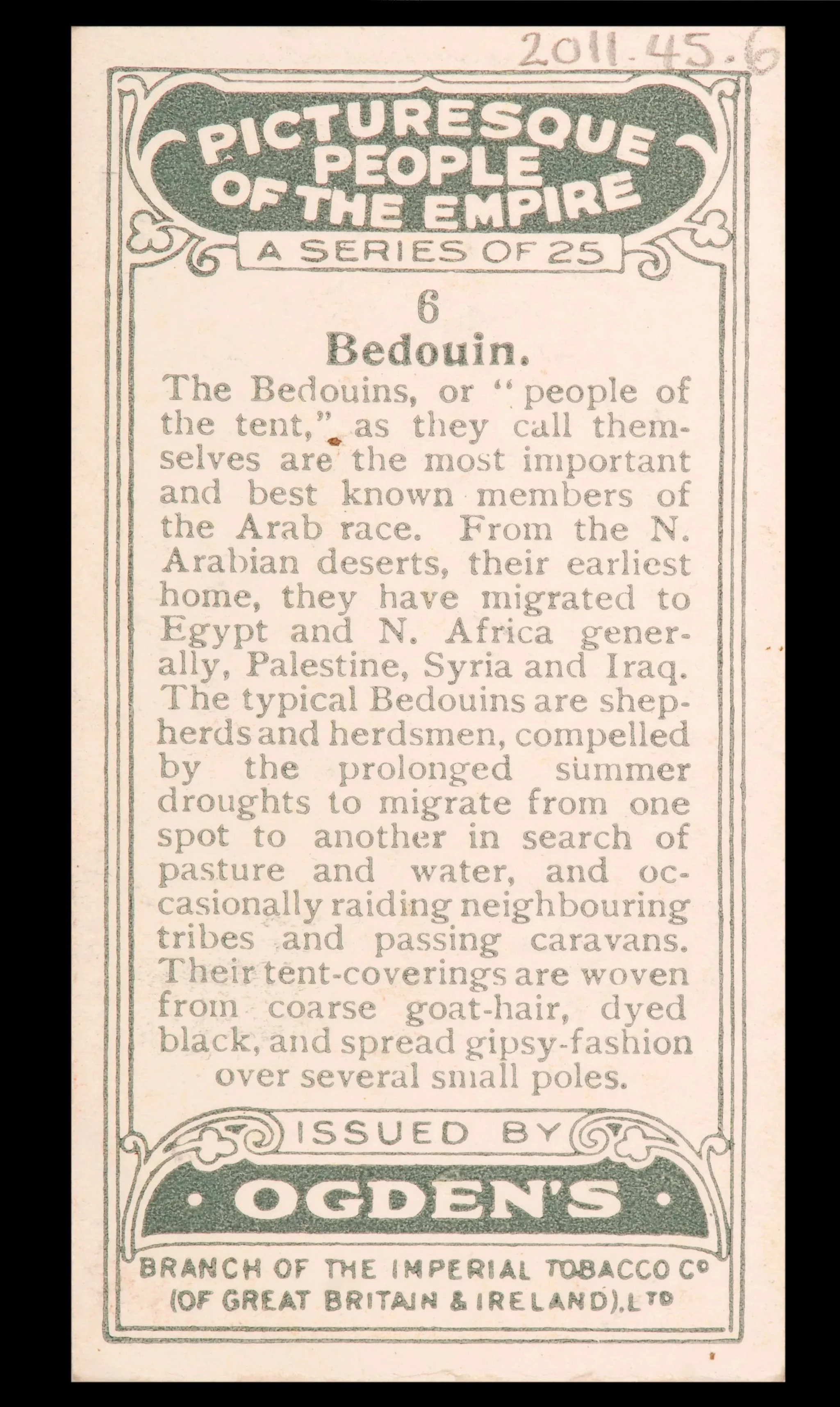
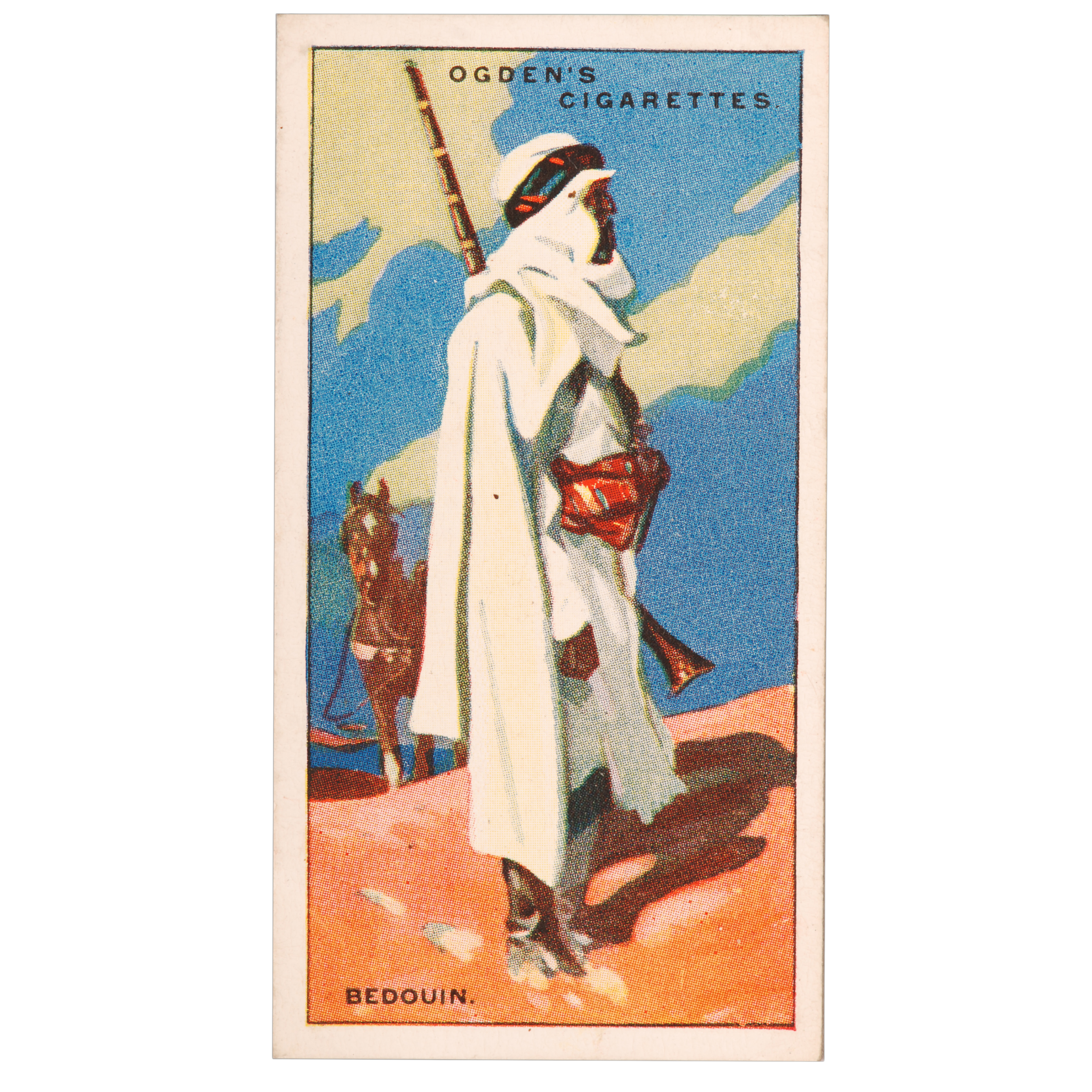
“Picturesque People of the Empire: Bedouin
Part of a set of 25 cigarette cards entitled 'Picturesque People of the Empire' issued by Ogden's branch of the Imperial Tobacco Co. Ltd.”
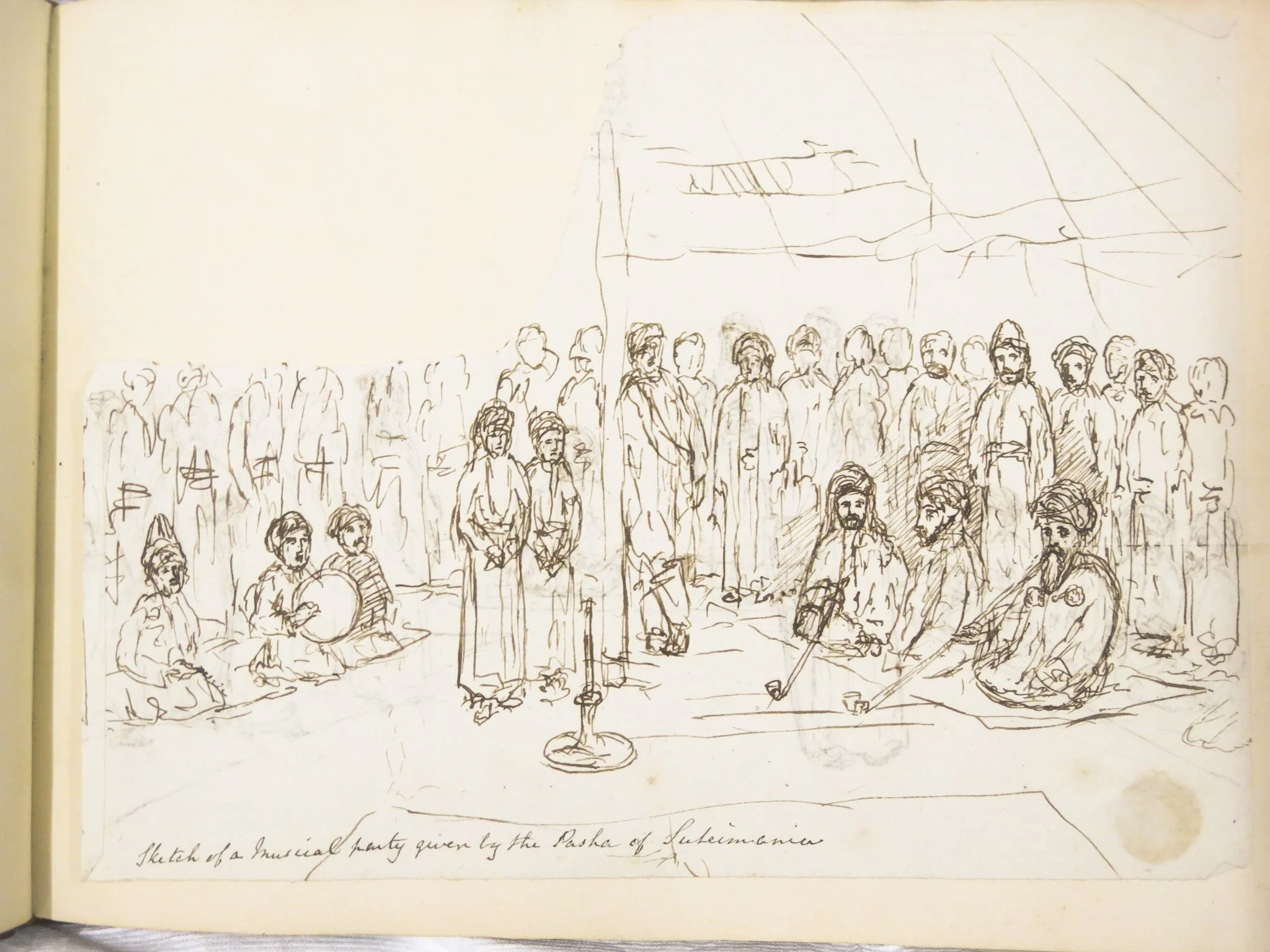
“Sketch of a Musical Party given by the Pasha of Suleimania from a sketchbook of drawings by C. J. Rich, of life and costumes in Baghdad in colour and pencil.”
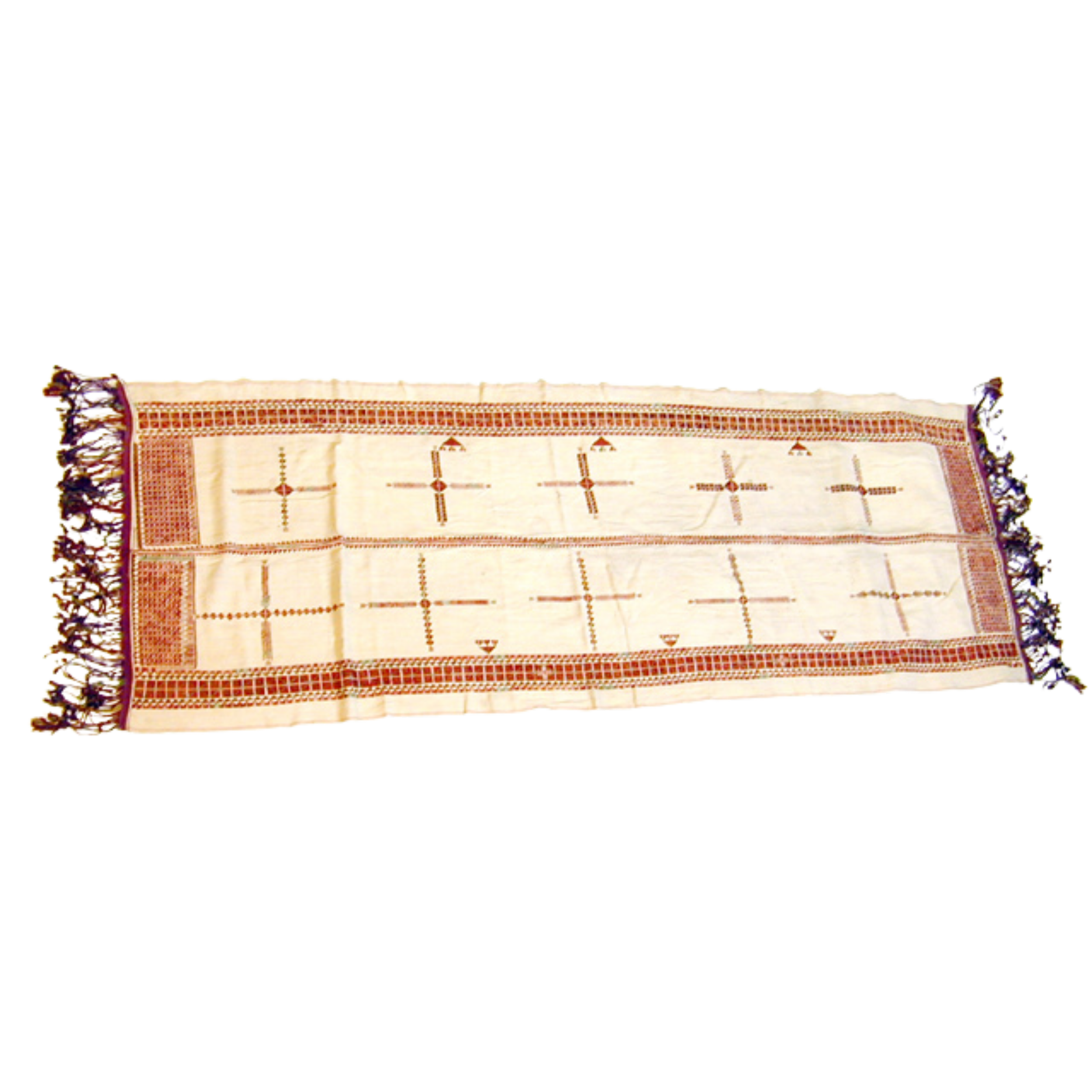
Ramallah veil described as a “Christian Arab woman’s veil”
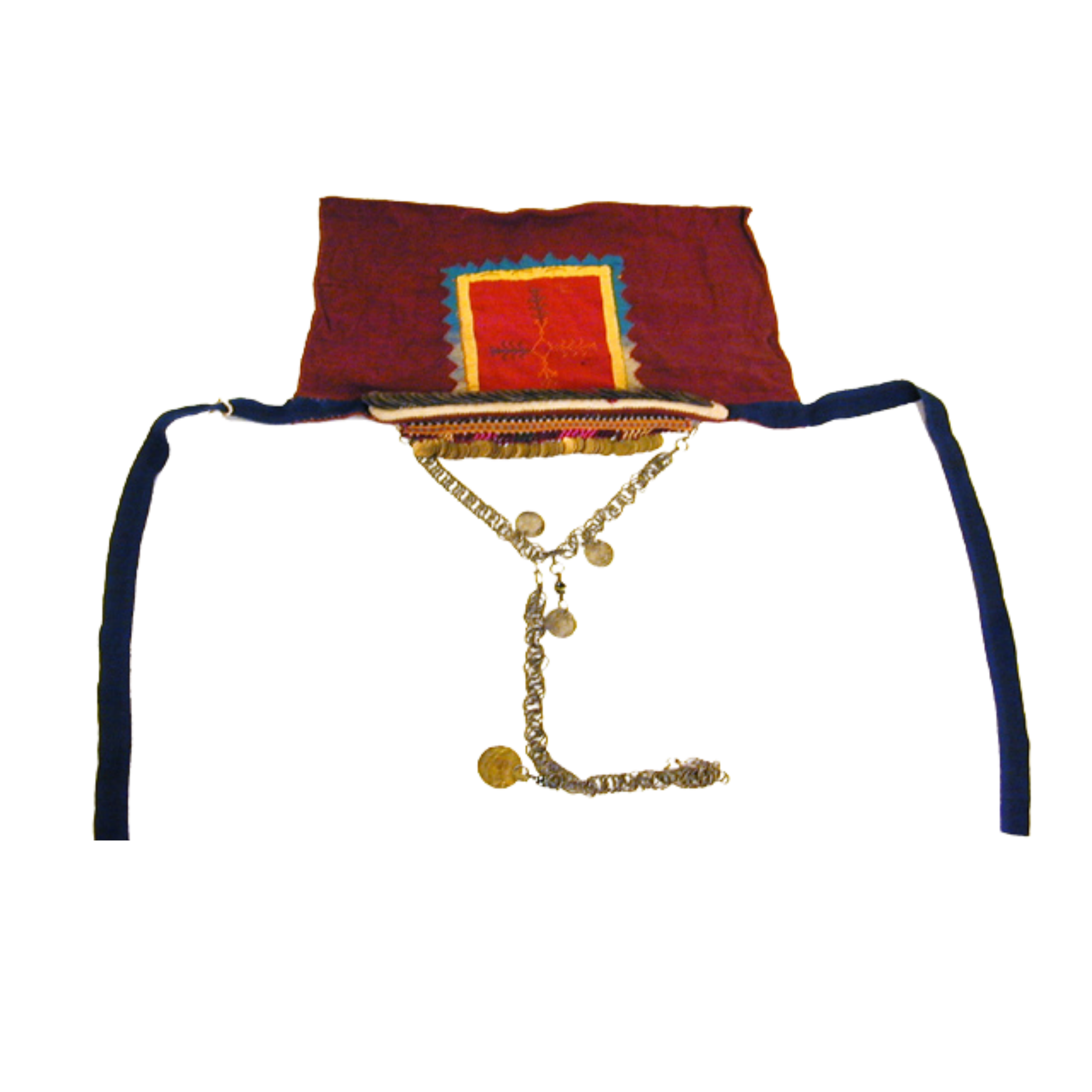
Woman’s headdress described as worn by an “unmarried Christian/Arab woman”
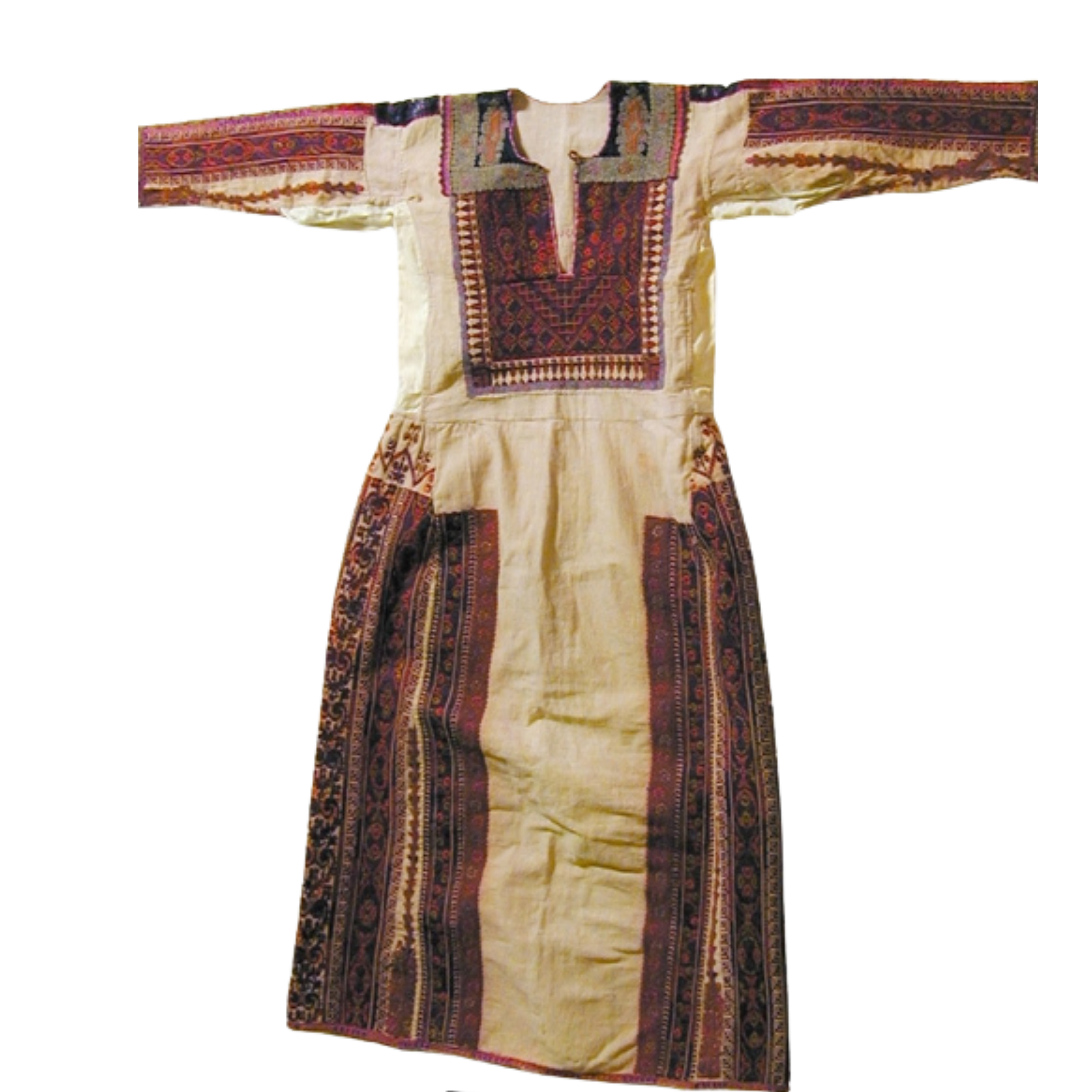
“Arab girl’s dress” specially embroidered for Felicity Ashbee during her visit in 1935
Who gets to define us?
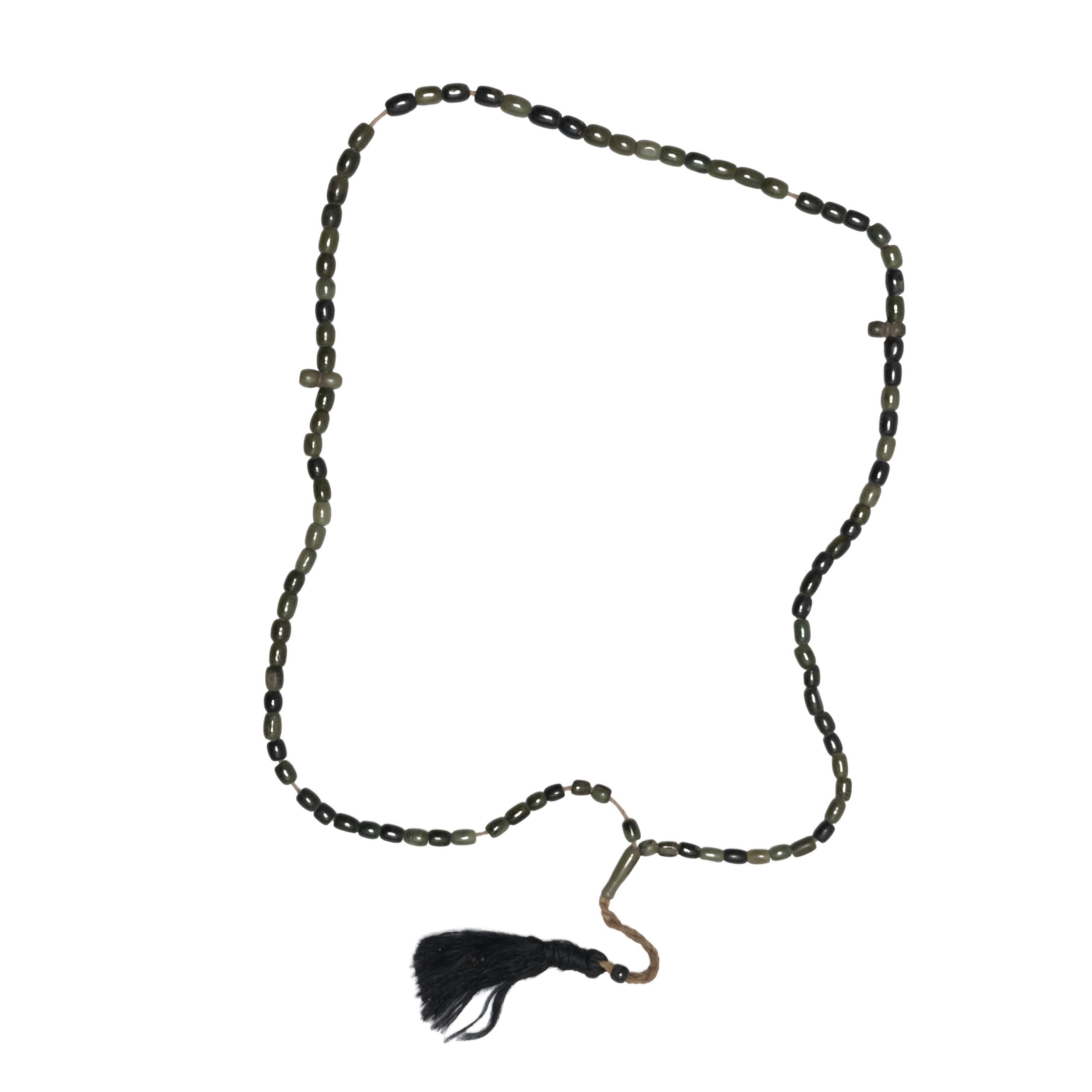
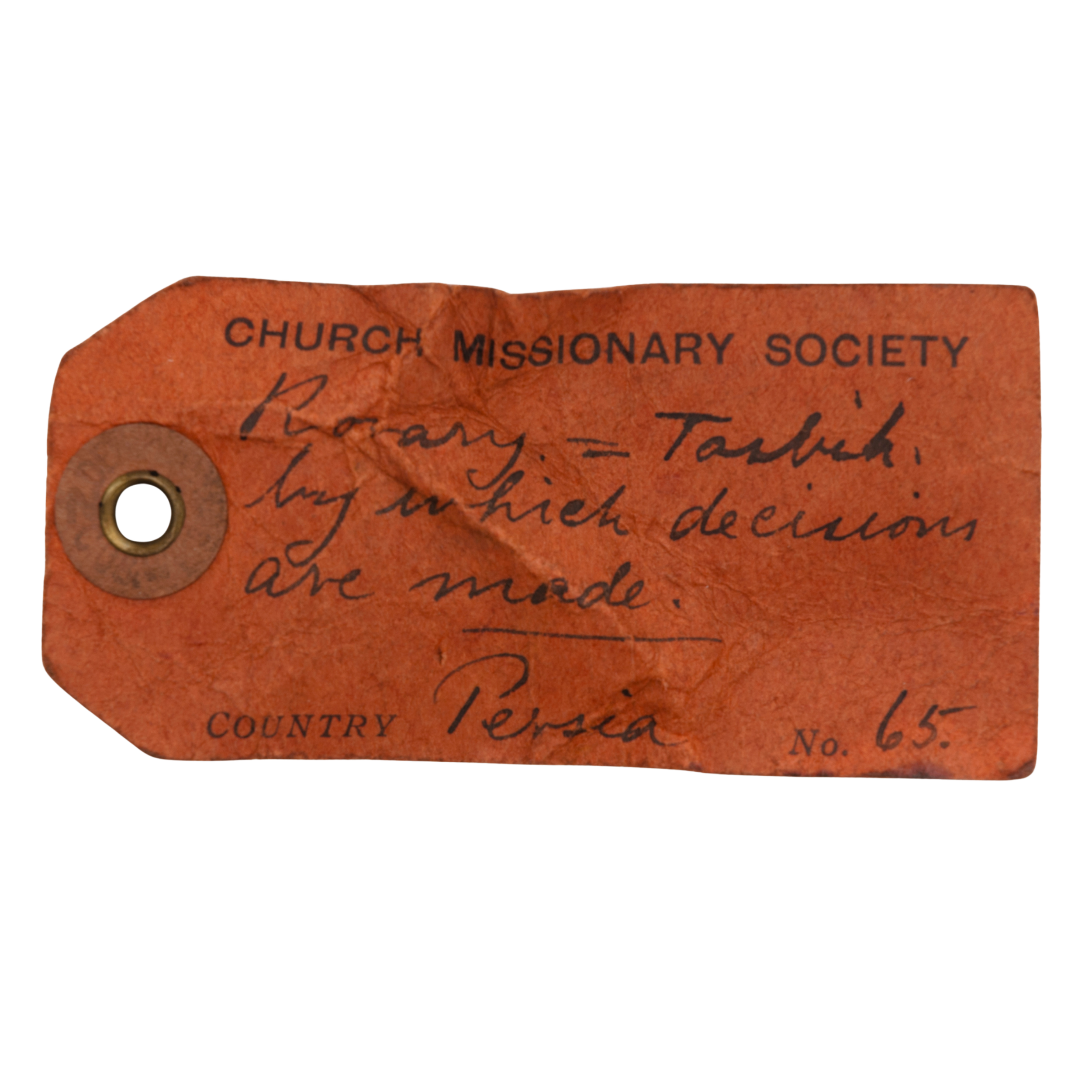
“Rosary = Tasbih
by which decisions are made.”
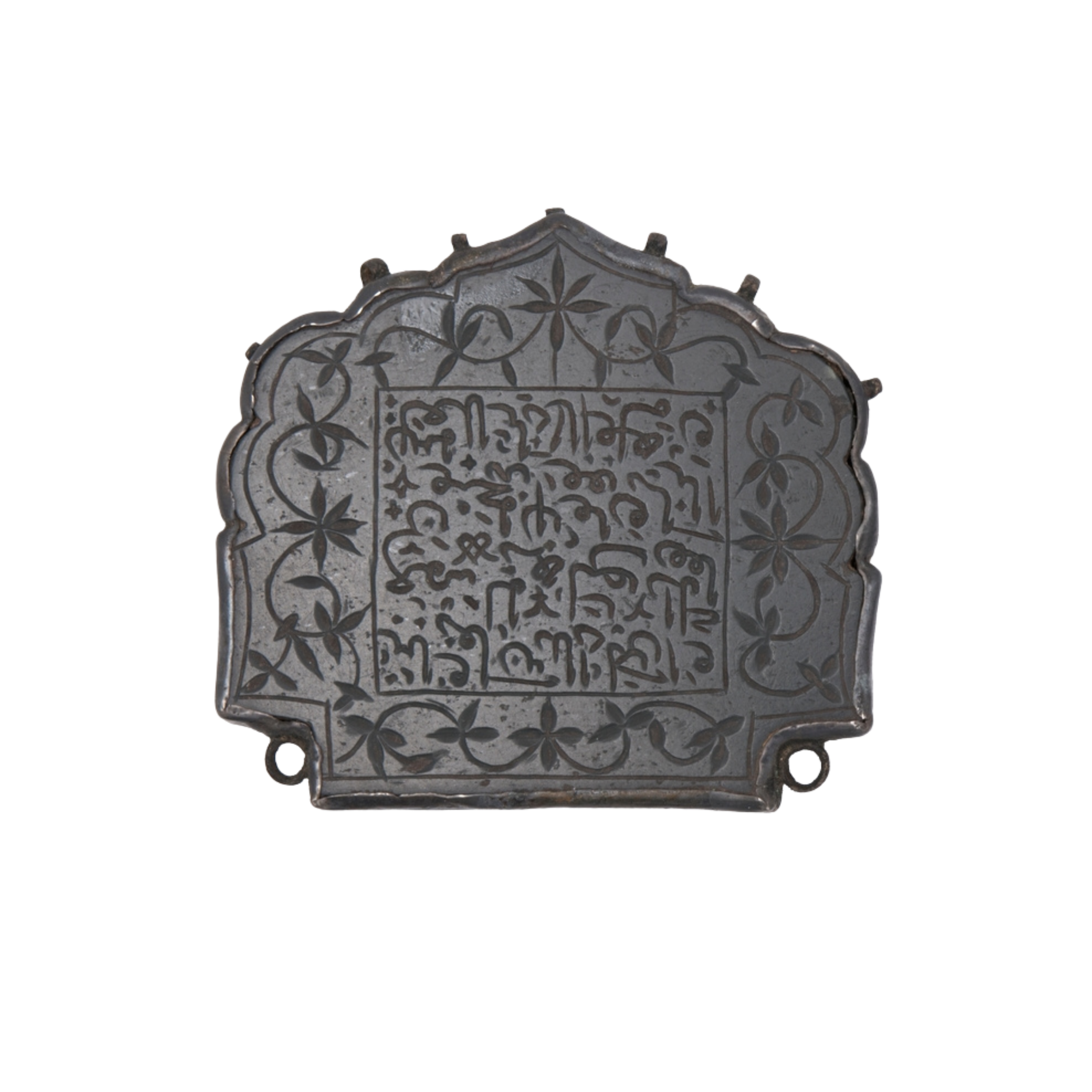
Amuletic stone labelled “MAHOMMEDAN AMULET”
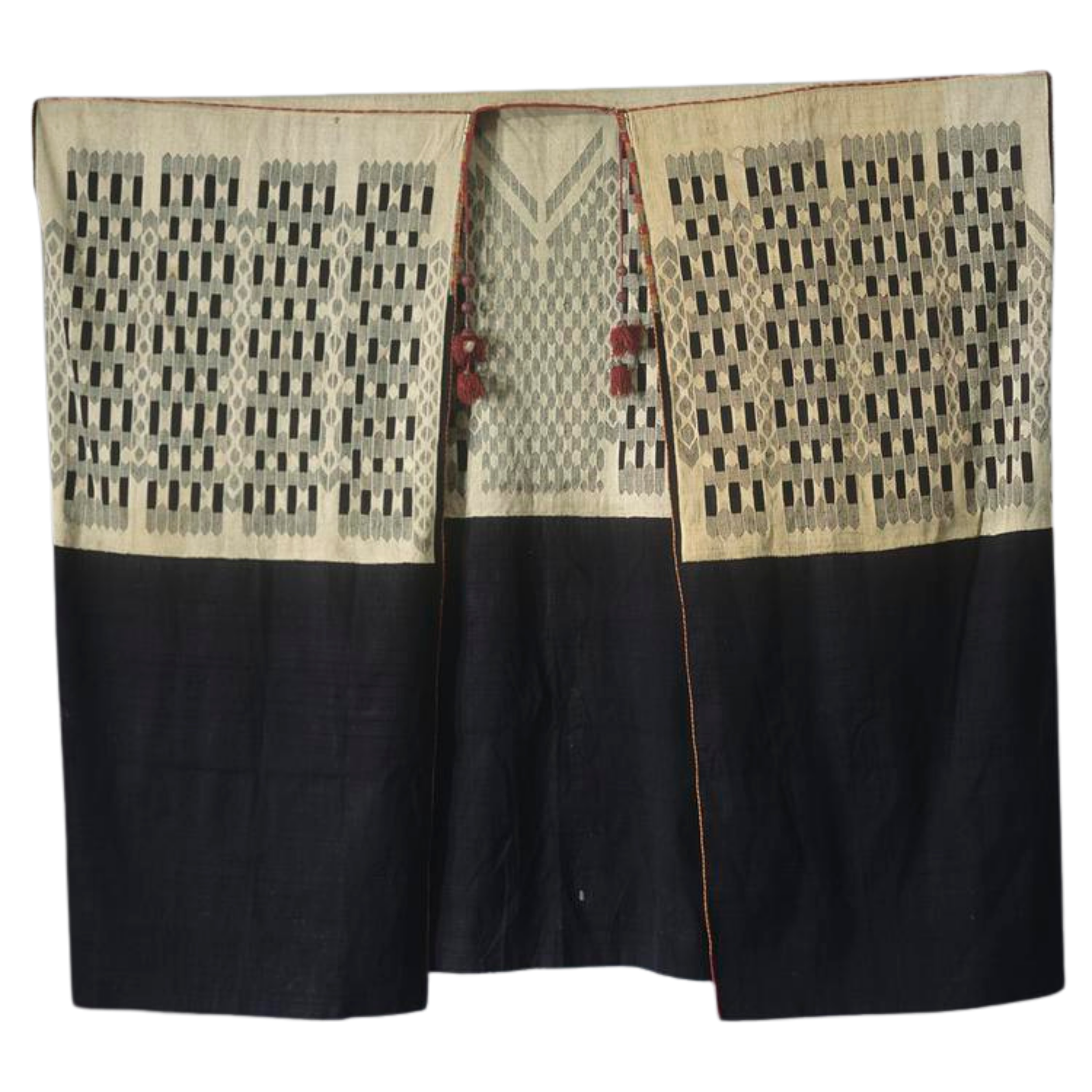
Cloak catalogued as made at Deriyah, “capital of the Wahabis”
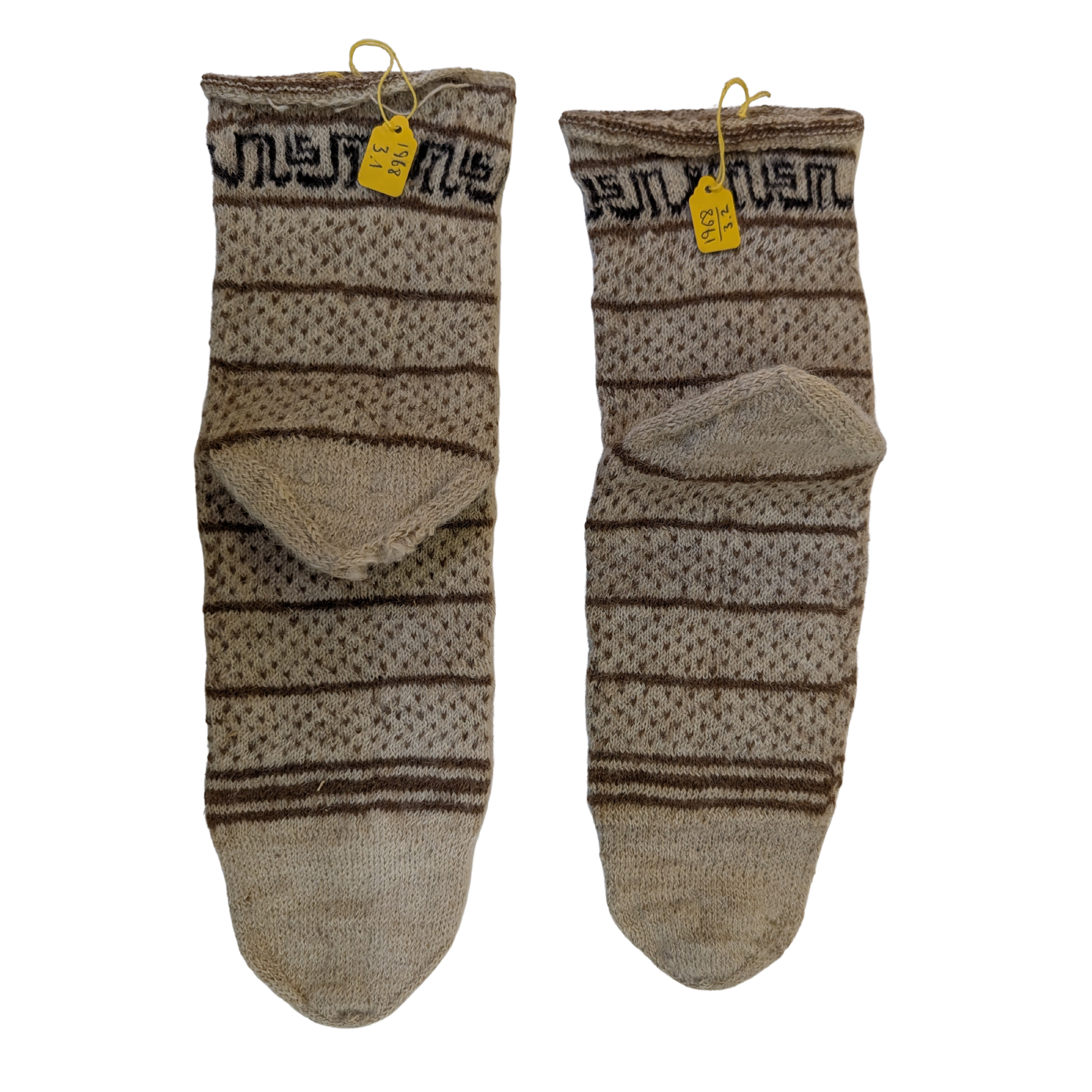
Socks catalogued as “West Asia, Kurdistan”
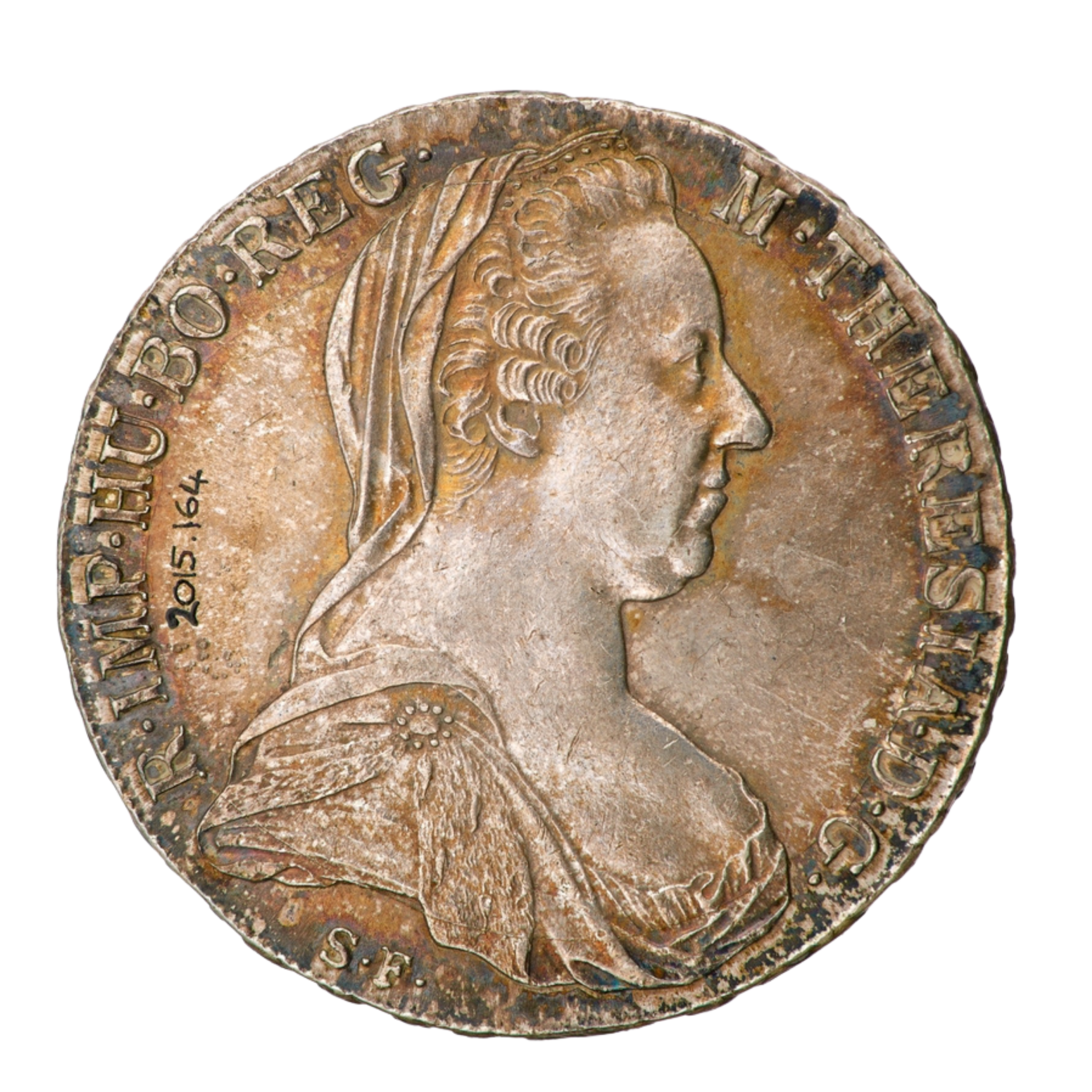
"A silver riyal coin, reproduction of a Maria Theresa"
What knowledge do communities carry that museums cannot collect?
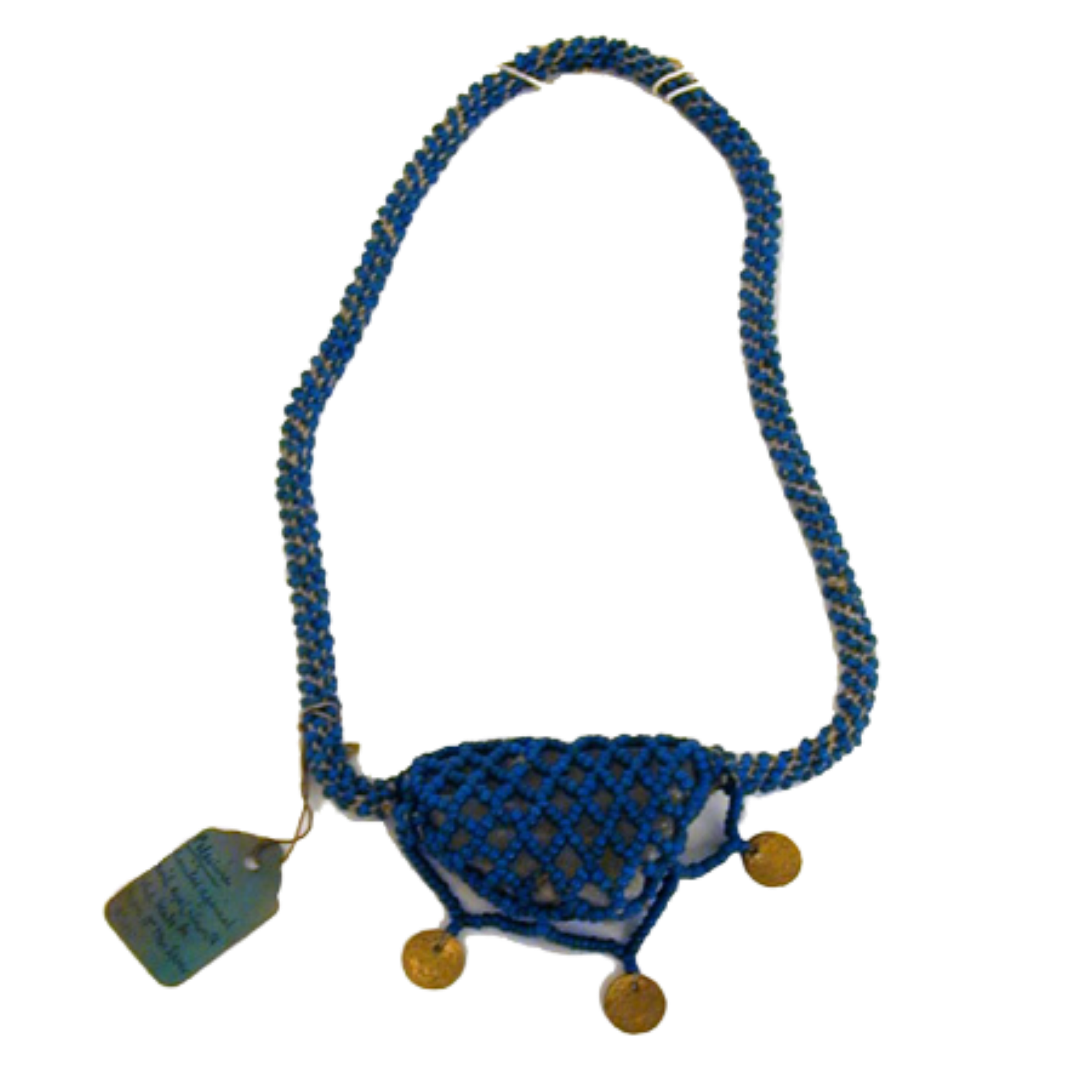
“Palestinian evil-eye amulet”
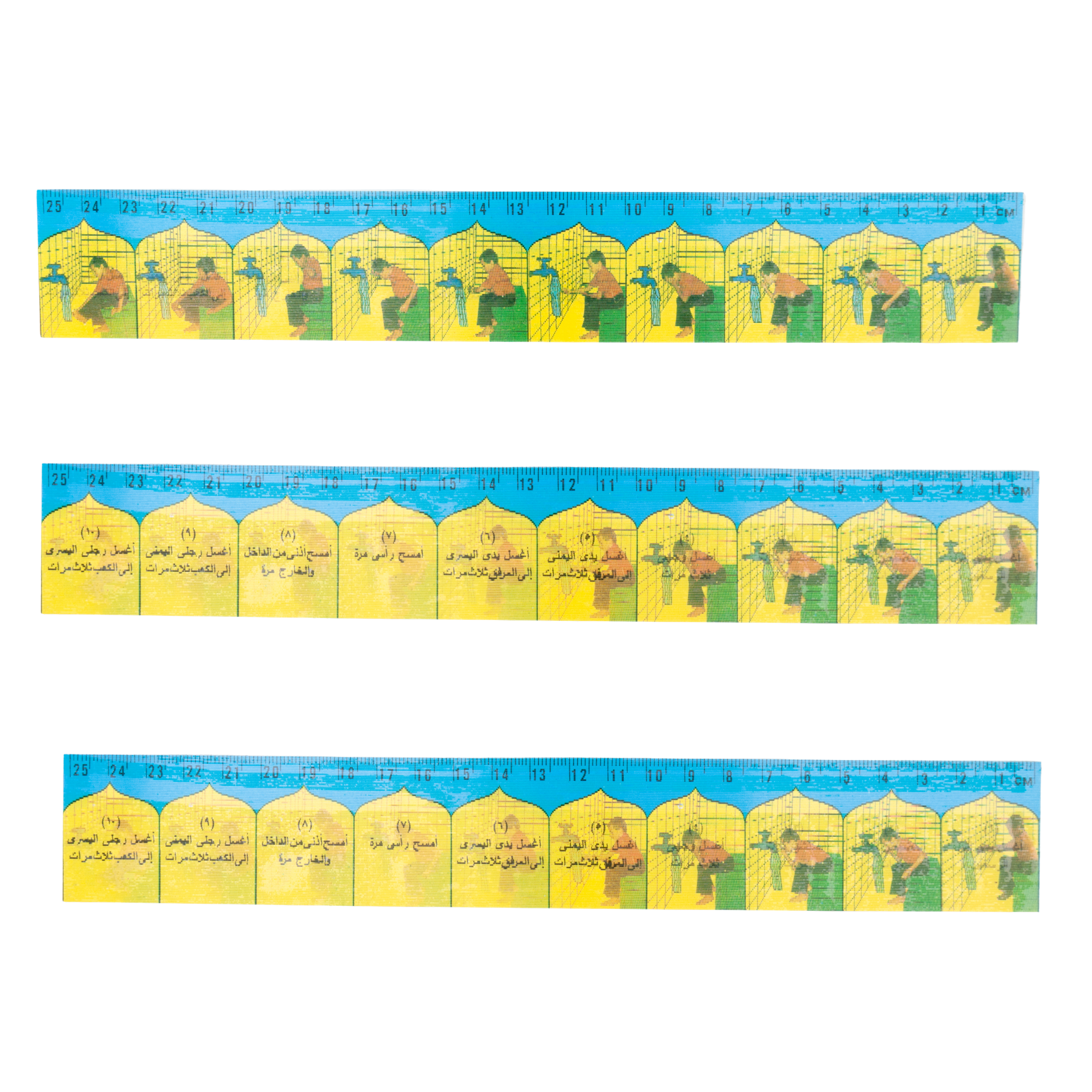
“Plastic ruler made in Taiwan and collected in Egypt”
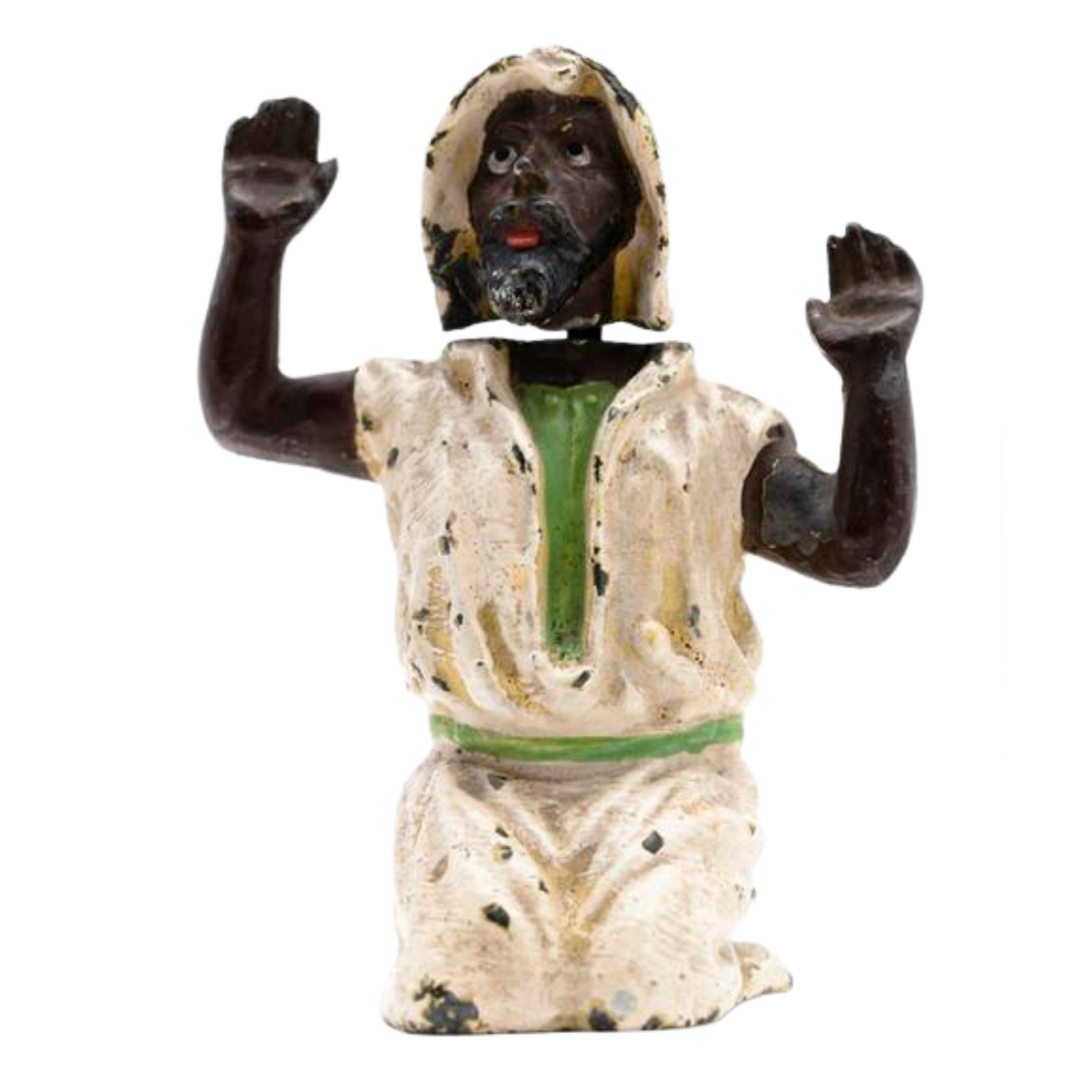
"Cast figure of a praying man"
"Jordanian Bedouin prayer mat"
"Book of domestic Islamic laws"
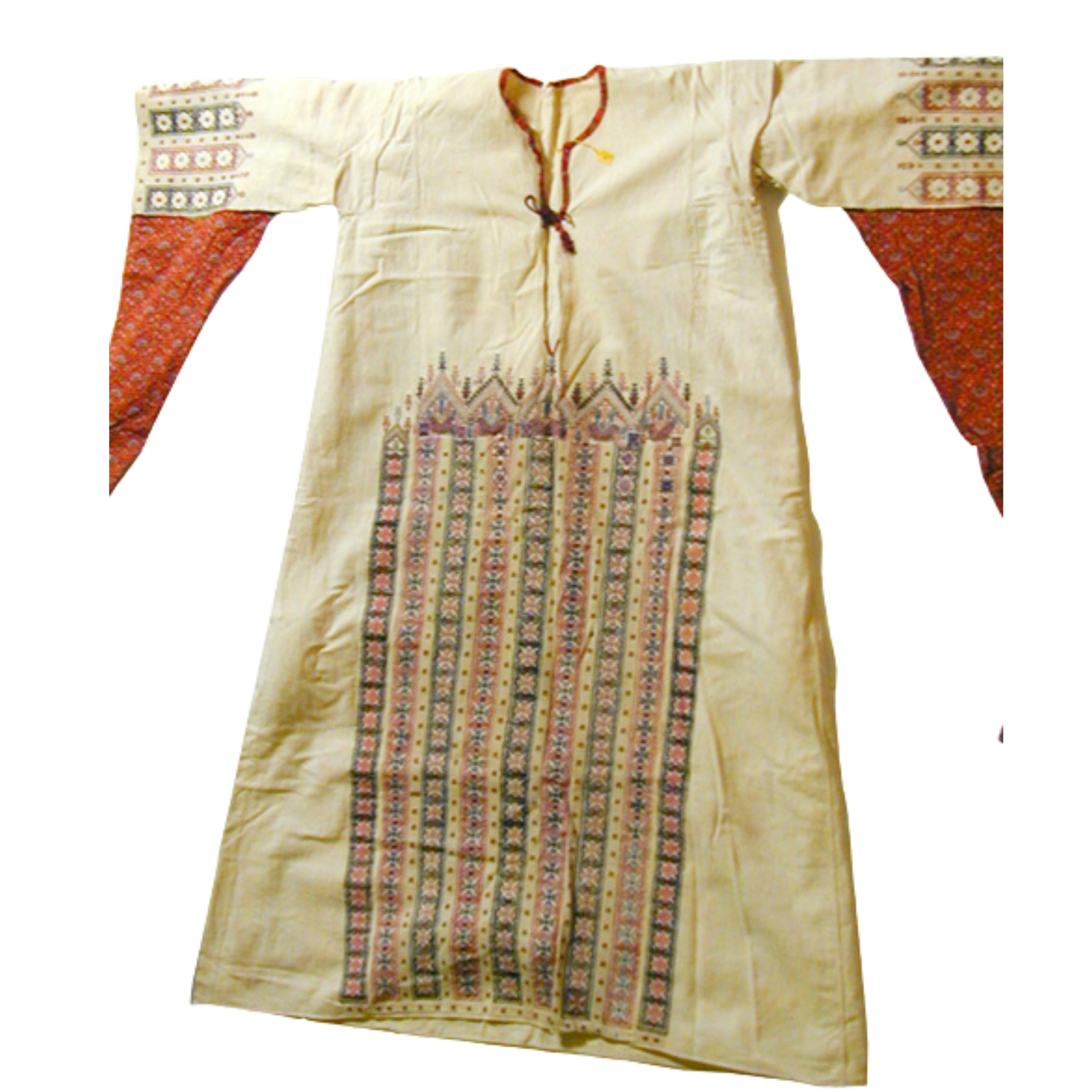
"Palestine. White cotton dress heavily embroidered"
What gets lost when a belonging is separated from the people who know it?
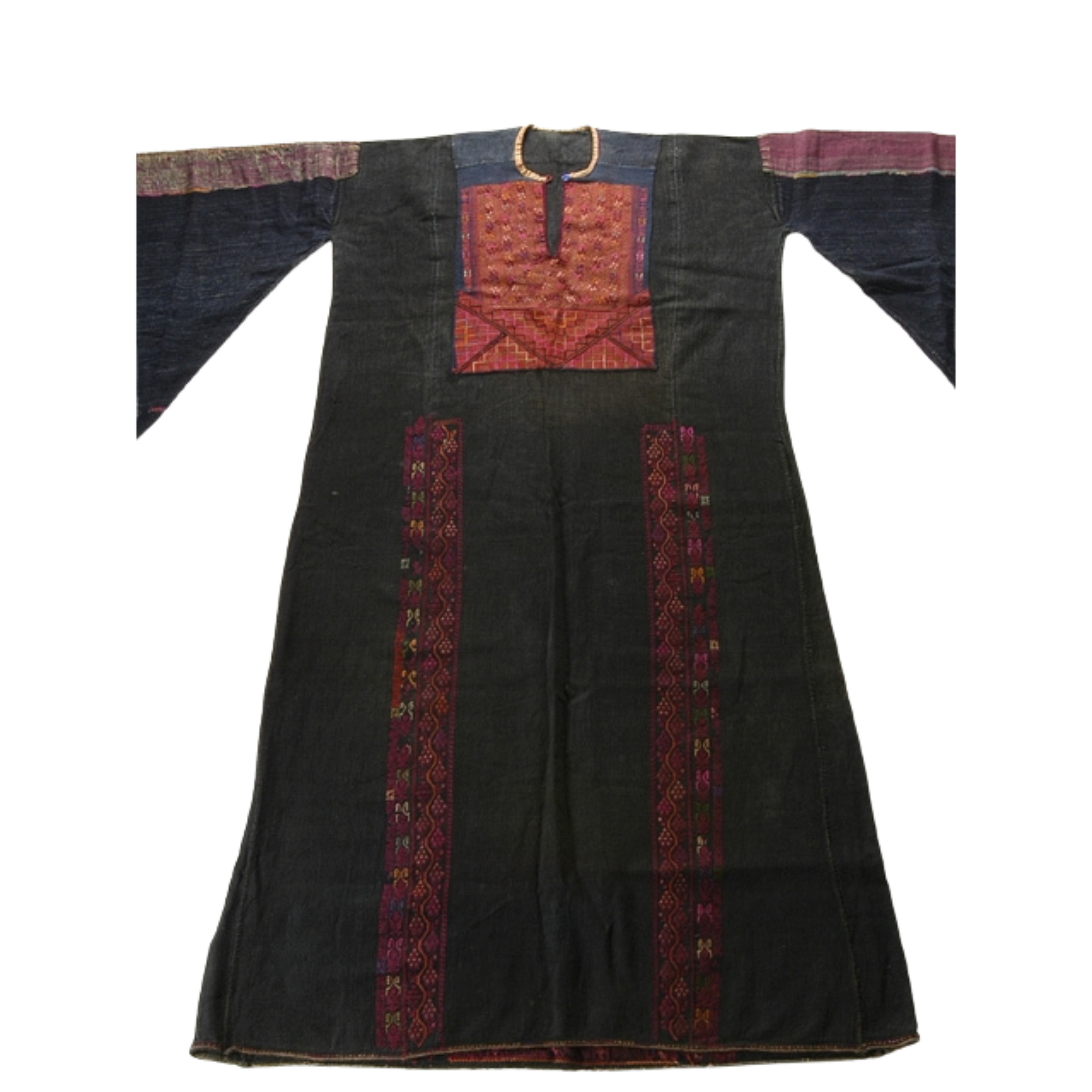
"Local name: Mutarazz."
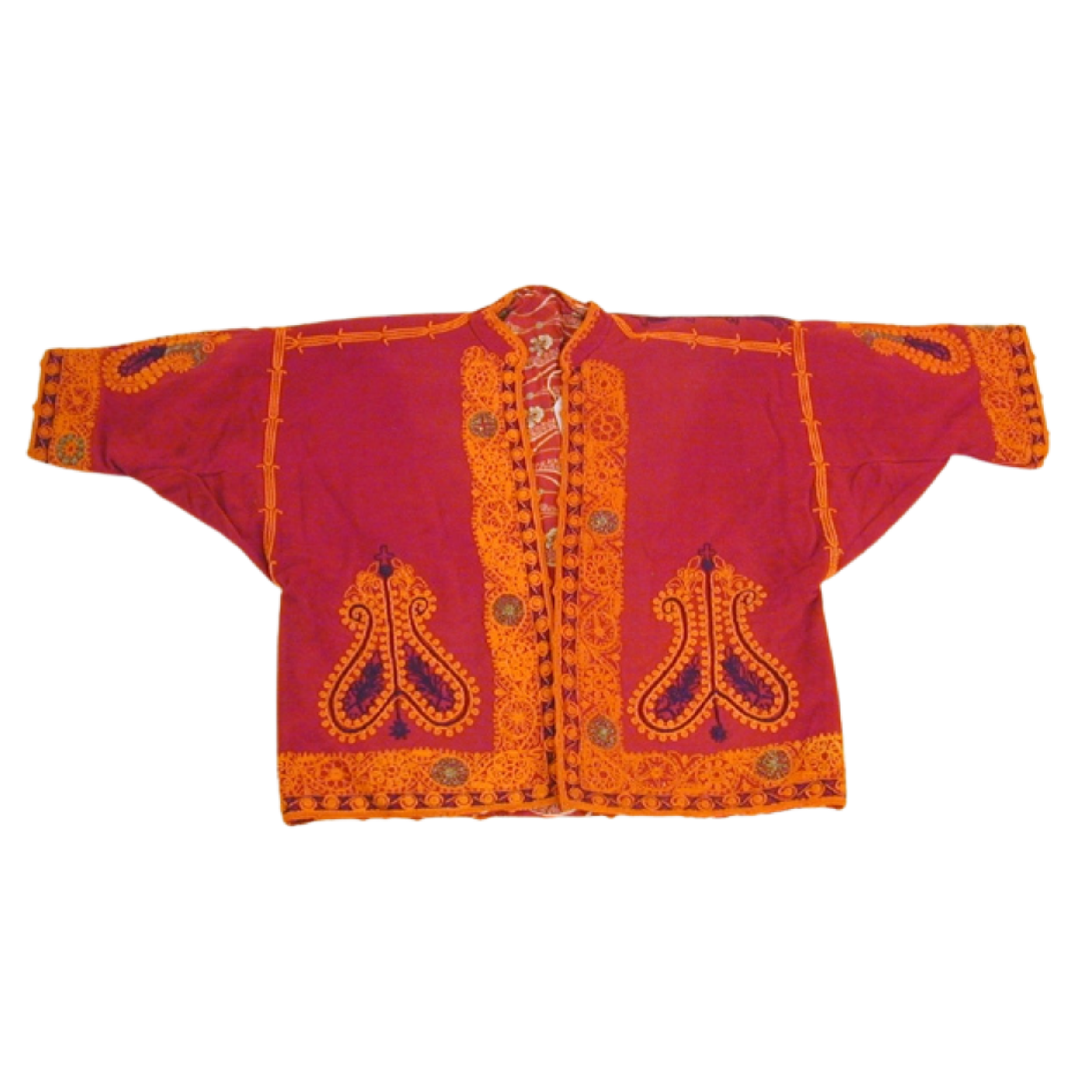
"Red, short sleeved, bolero style wool jacket"
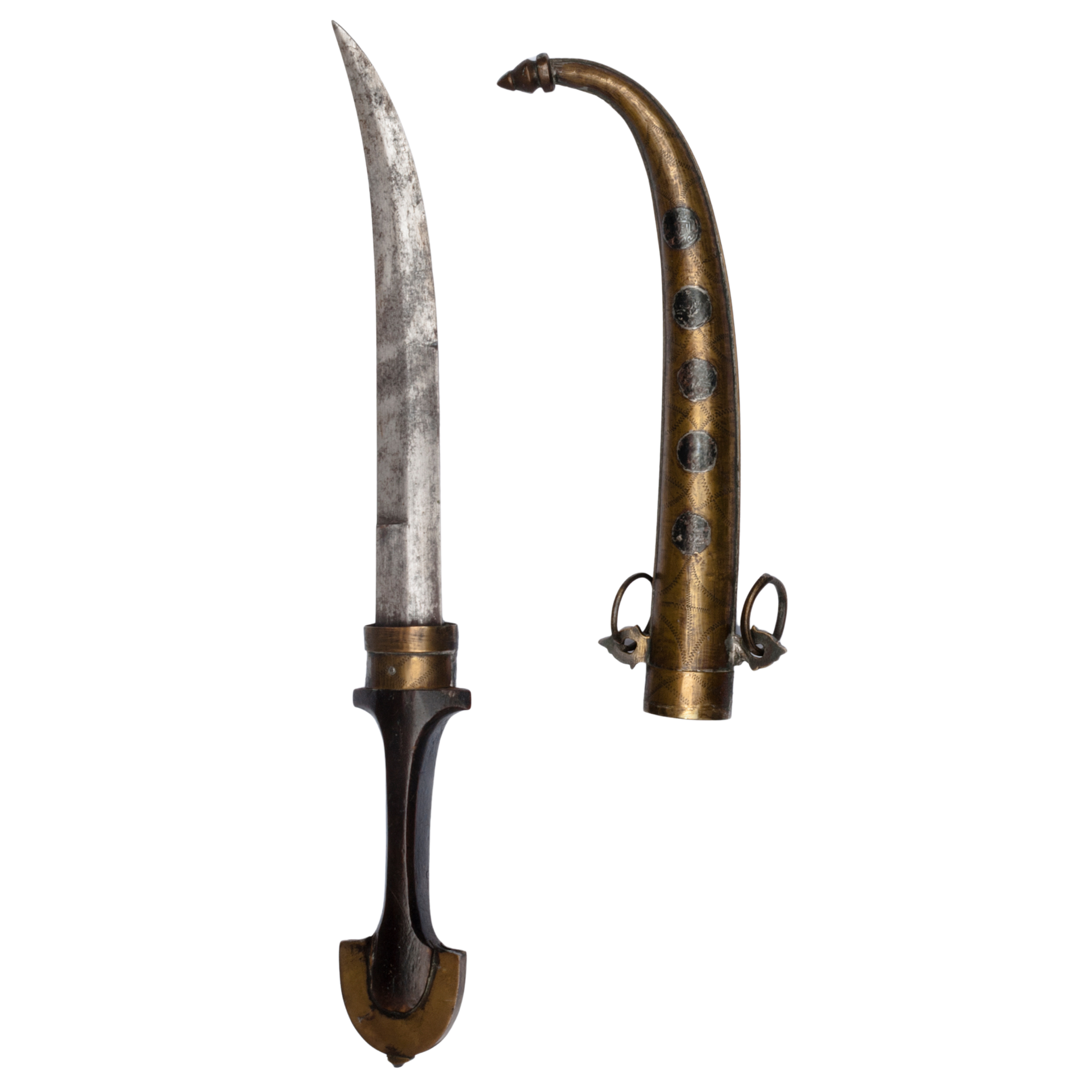
"Dagger with sheath, Morocco. Use: fighting"
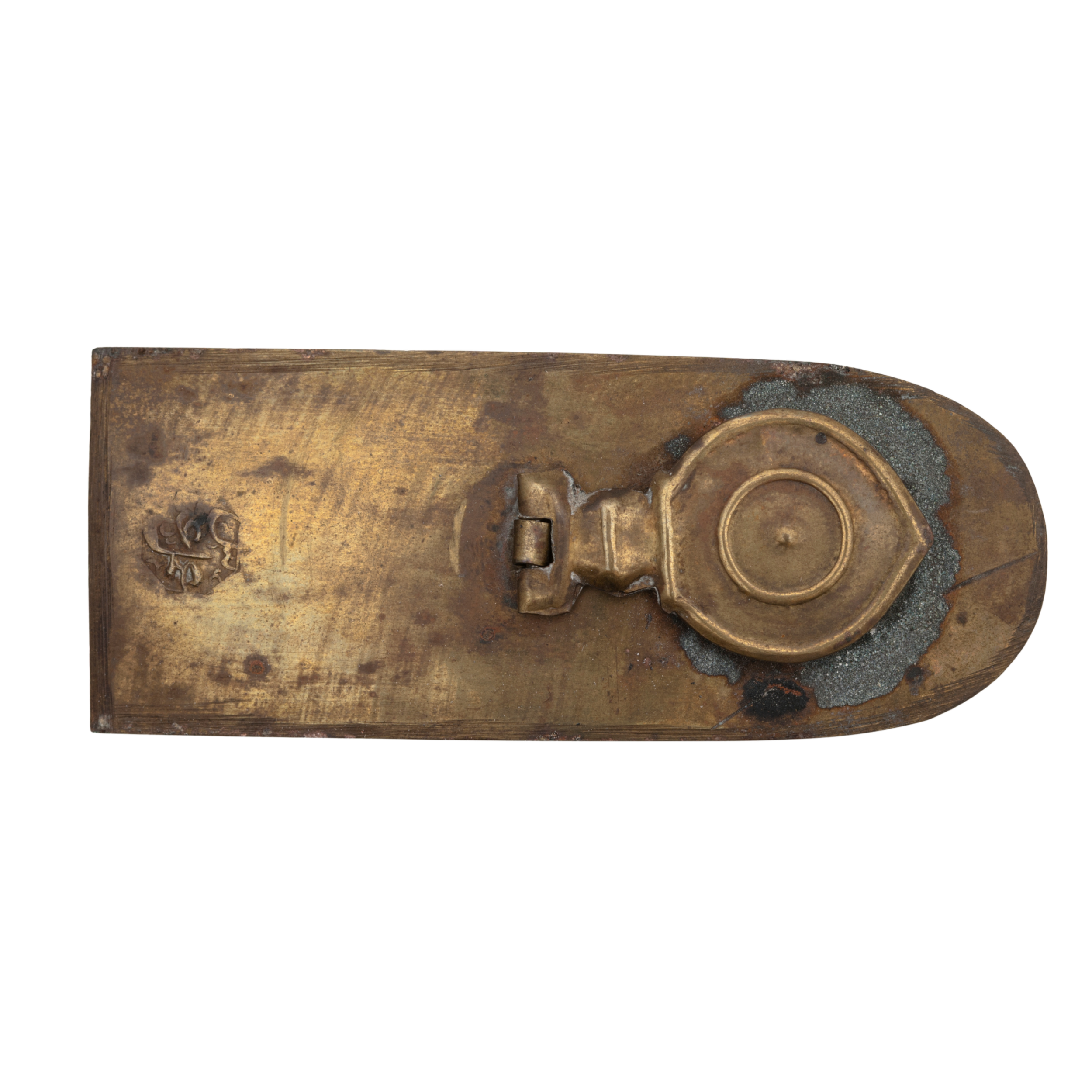
"Ink well has a small inscription on the upper side."
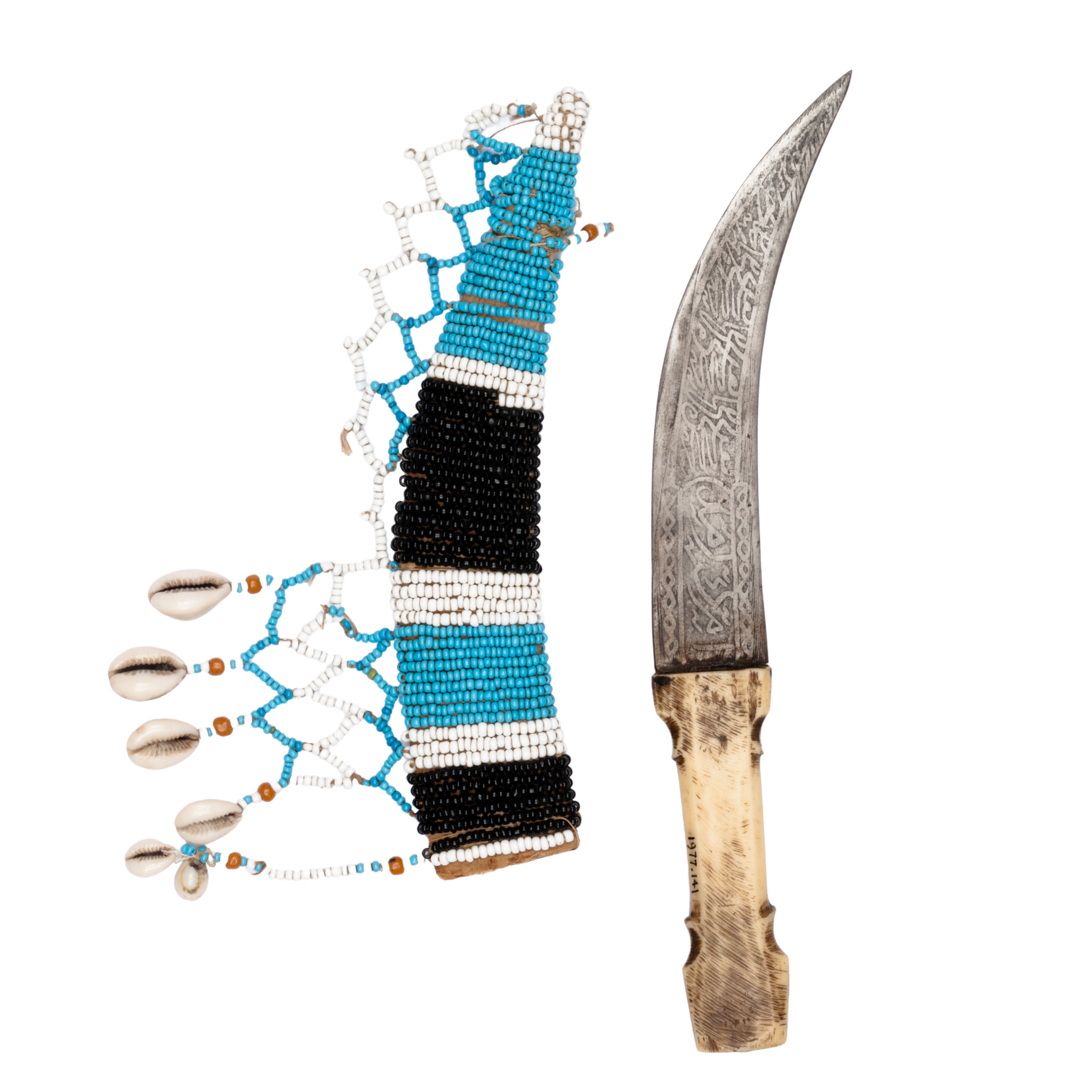
"Dagger with a jambiya pattern. The inscription on the blade is believed to translate as: 'we will obey your rule for ever'. Use: fighting"
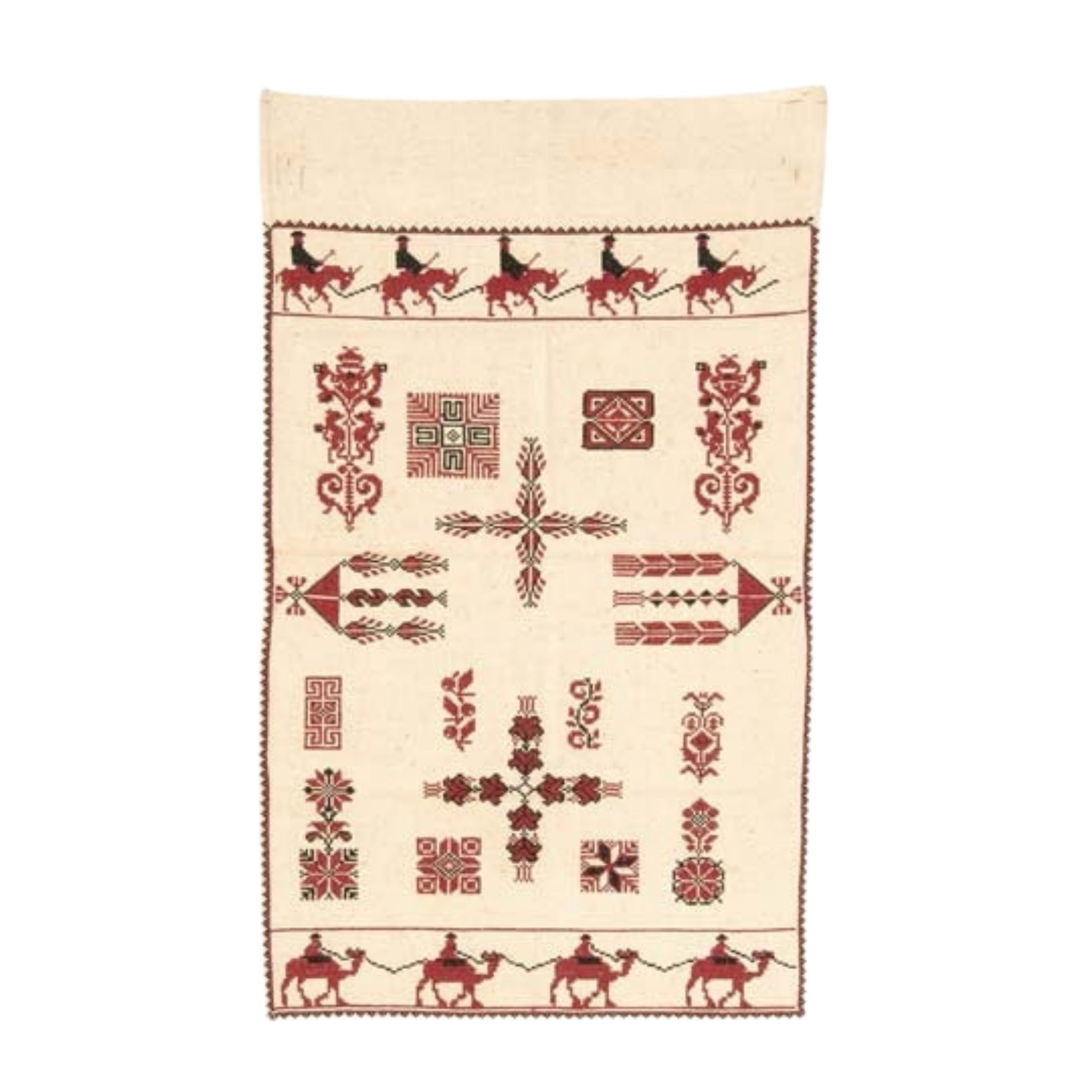
"Sampler decorated with red and black cross-stitch. On the bottom border the figure is riding on a camel. Place: Beirut."
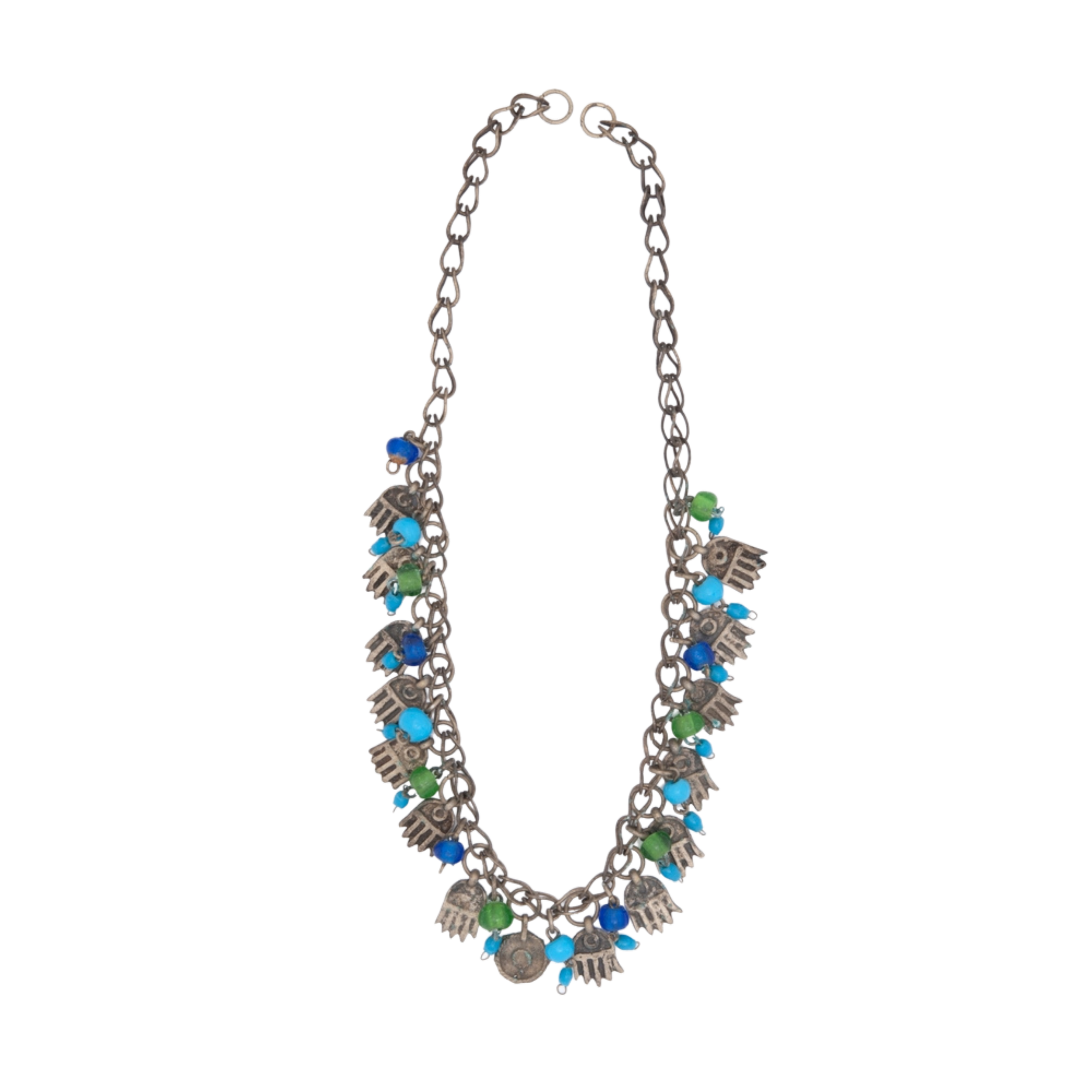
"Near East. Charm necklace, possibly representations of hands."
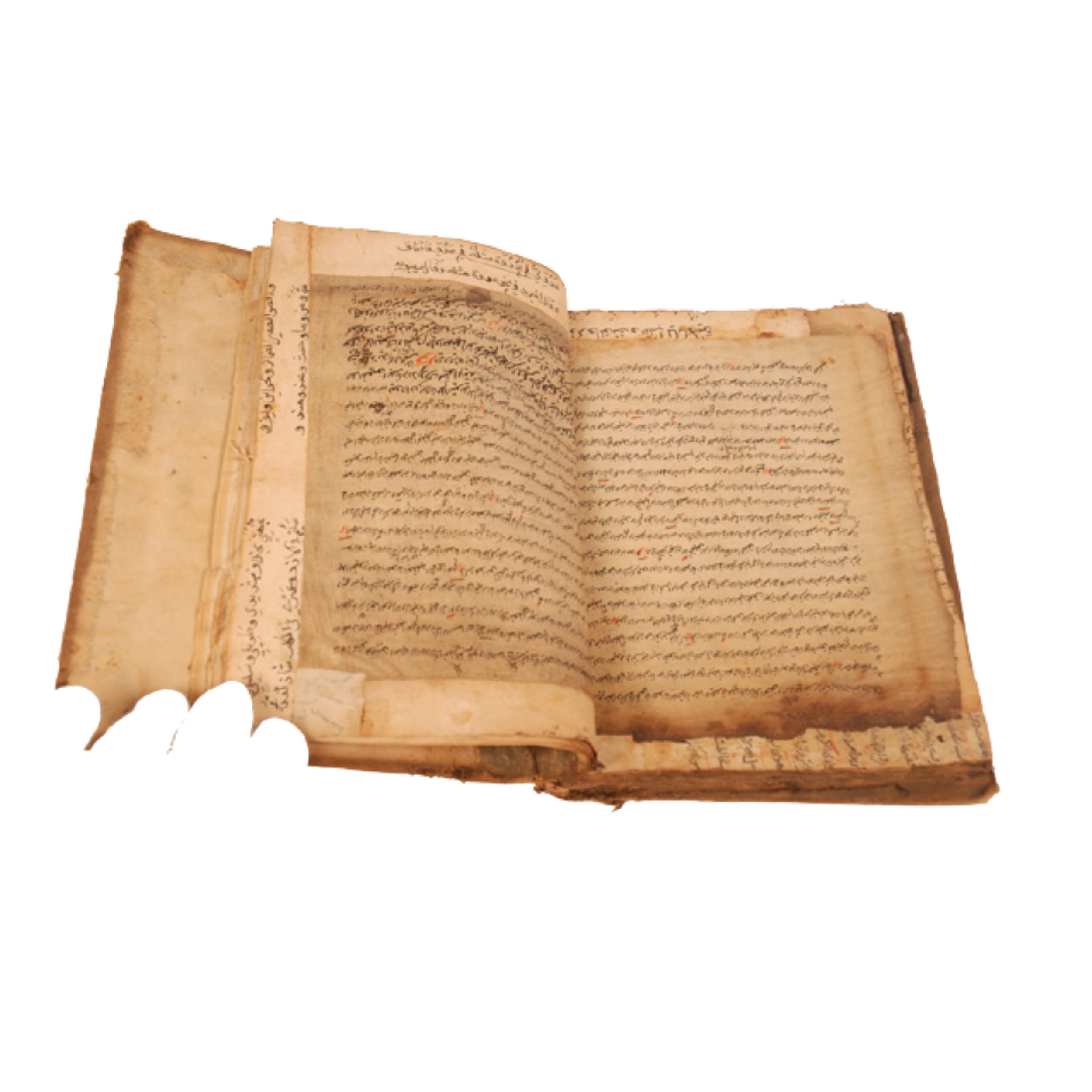
"Cloth bound book containing philosophical text by Sha Mustaffa in the Arab language in Arabic script."
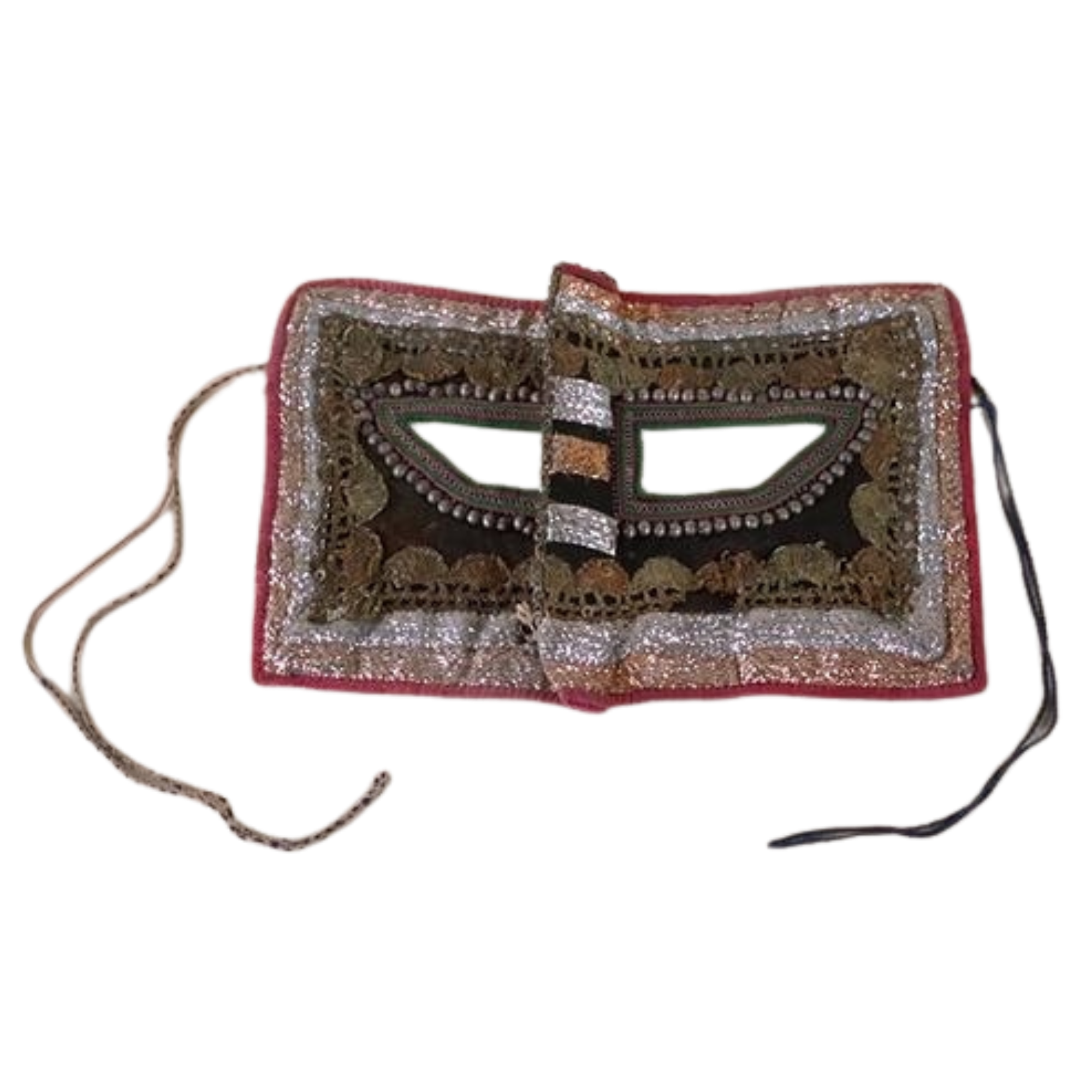
"Woman's face mask, batula"
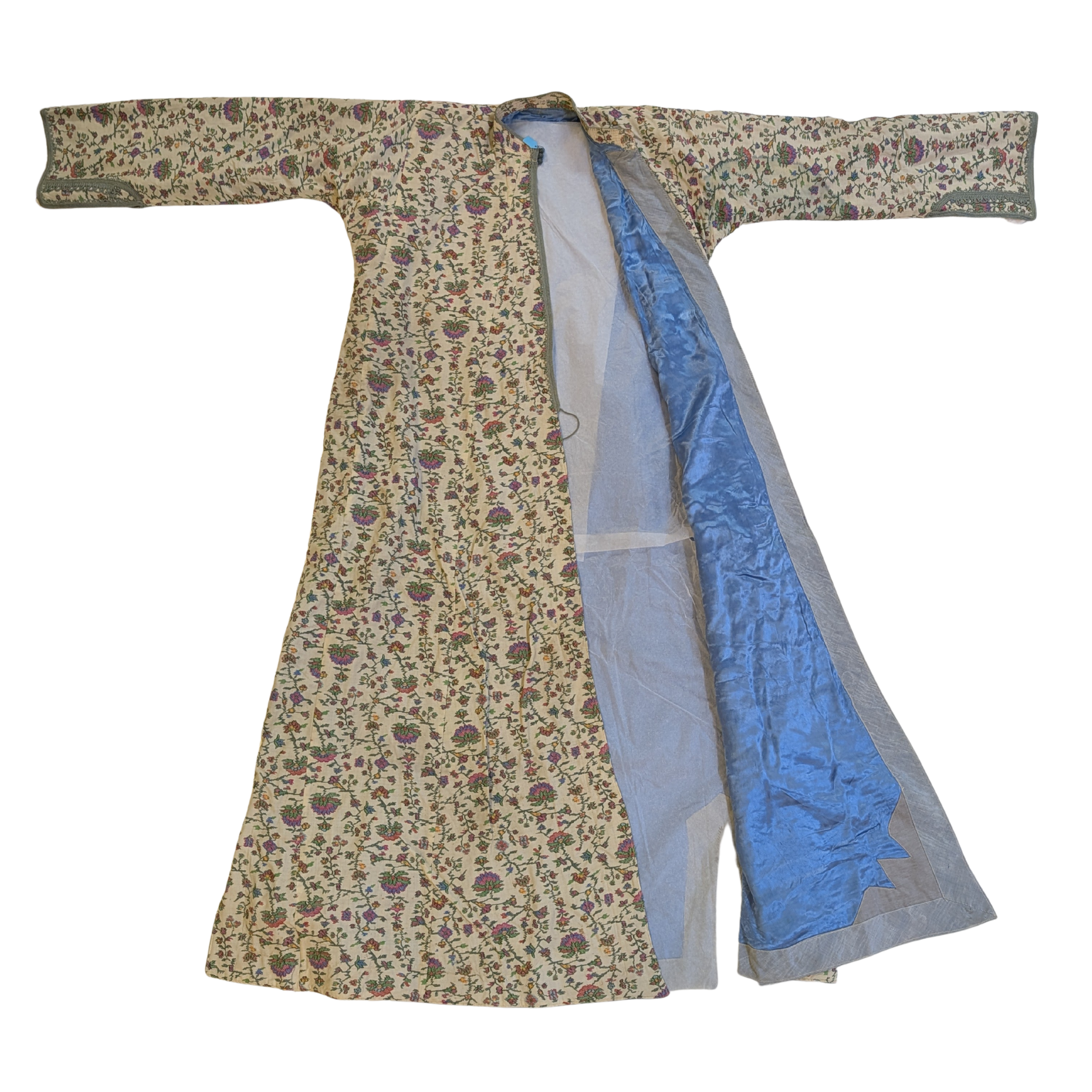
"Multi-coloured floral design". Collected: Saudi Arabia
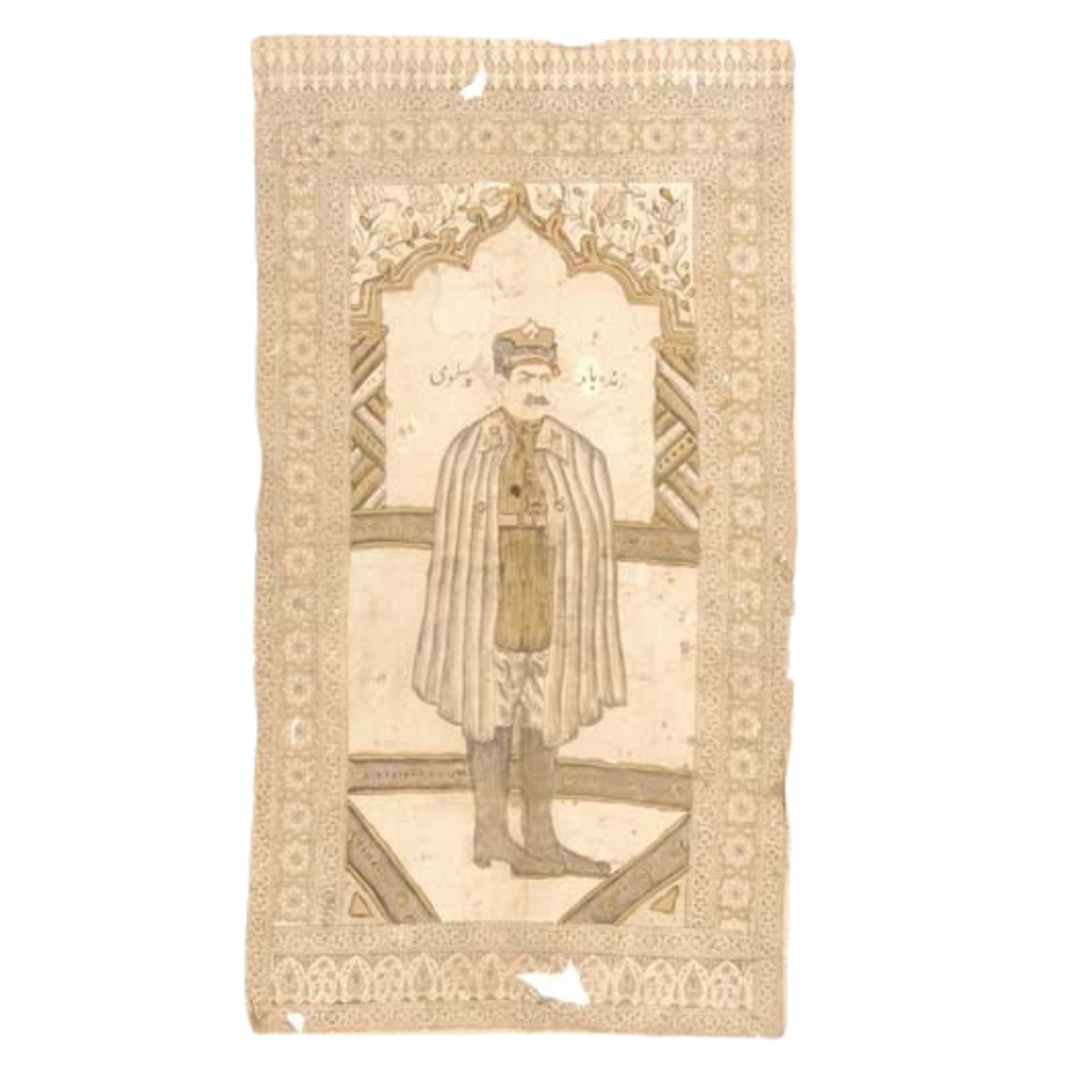
"Textile: function unknown. The painted decoration consists of a standing moustachioed figure, possibly Reza Shah. Inscription which translates as 'Long live the Pahlavi dynasty!"
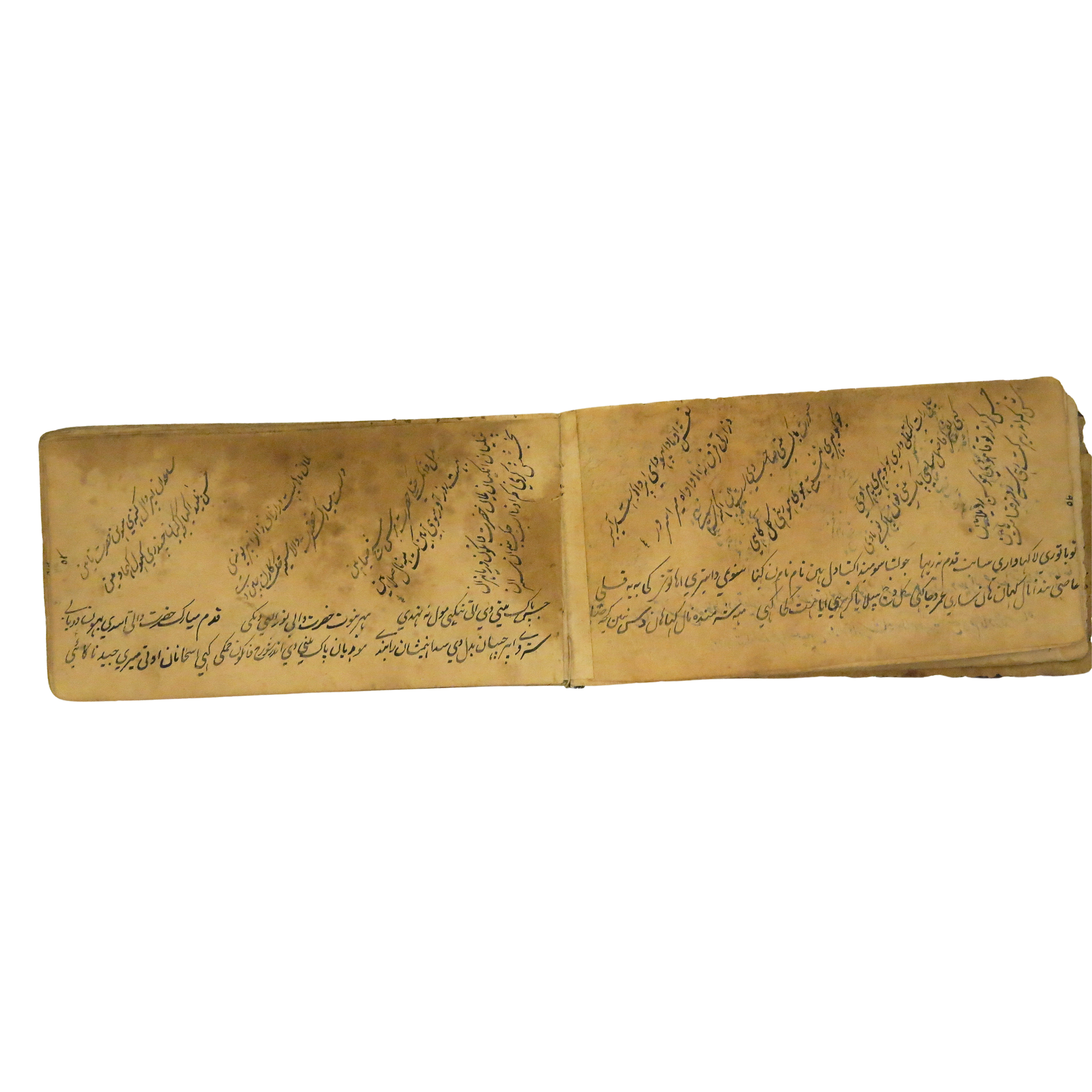
"Book with handwritten inscriptions in Arabic script"
Whose knowledge should the museum trust?
Your story belongs here:
Selected contributions may be included in the exhibition, on the project partners’ websites and social media channels, in digital project outputs, and in future research publications connected to the project.
Please note contributions may be edited, translated, excerpted, or graphically adapted to fit into the exhibition.
If you have any questions about the consent, want more information about the project, would like to withdraw your submission, contact: al[at]hekayyatna.org
*Deadline to withdraw your submission is 15 October 2026.
About the project
This activity forms part of (Re)Claimed: Liberating South West Asia and North Africa (SWANA) in UK Museums, a community project developed by Hekayyatna, the Horniman Museum and Gardens, and UCL.
The project is supported through the ESRC Impact Acceleration Account at UCL Innovation & Enterprise, Grant Reference ES/X004627/1. It explores how SWANA histories and cultures are represented in UK museums and what becomes possible when communities reclaim the authority to interpret their own heritage.
*What do we mean by ‘SWANA’?
For this project, ‘SWANA’ (South West Asia & North Africa) communities are self-defined and connected through relationships, not treated as a single, fixed or homogeneous group. Those connections might come through origin or descent, language, culture, faith, family history, migration, displacement, diaspora, or an ongoing relationship with particular heritage and collections.
You can take part if you identify as being from, descended from, or connected to the SWANA region, including through diaspora, migration or displacement. We welcome contributions from anyone whose sustained knowledge or practice connects them to SWANA heritage: contribute from your own experience, knowledge, and perspective.